
Introducción
El sector de la restauración evoluciona más rápido que nunca. En 2026, lo que espera el cliente ya no se limita a buena comida y servicio rápido. Quien va a comer fuera espera comodidad, personalización, rapidez y experiencias visualmente atractivas desde el momento en que entra en el local.
La carta impresa está quedando atrás a toda velocidad. Está claro que los restaurantes de todas partes están cambiando sus cartas de siempre por menús digitales dinámicos que mejoran la experiencia del cliente, aumentan la productividad del negocio y suben los beneficios.
Desde las actualizaciones en tiempo real hasta las promociones con IA, la tecnología de carta digital está redibujando el futuro de la restauración. Los restaurantes que se suben a esta transformación ganan ventaja competitiva; los que se quedan solo con la carta impresa corren el riesgo de descolgarse.
¿Qué es un menú digital?
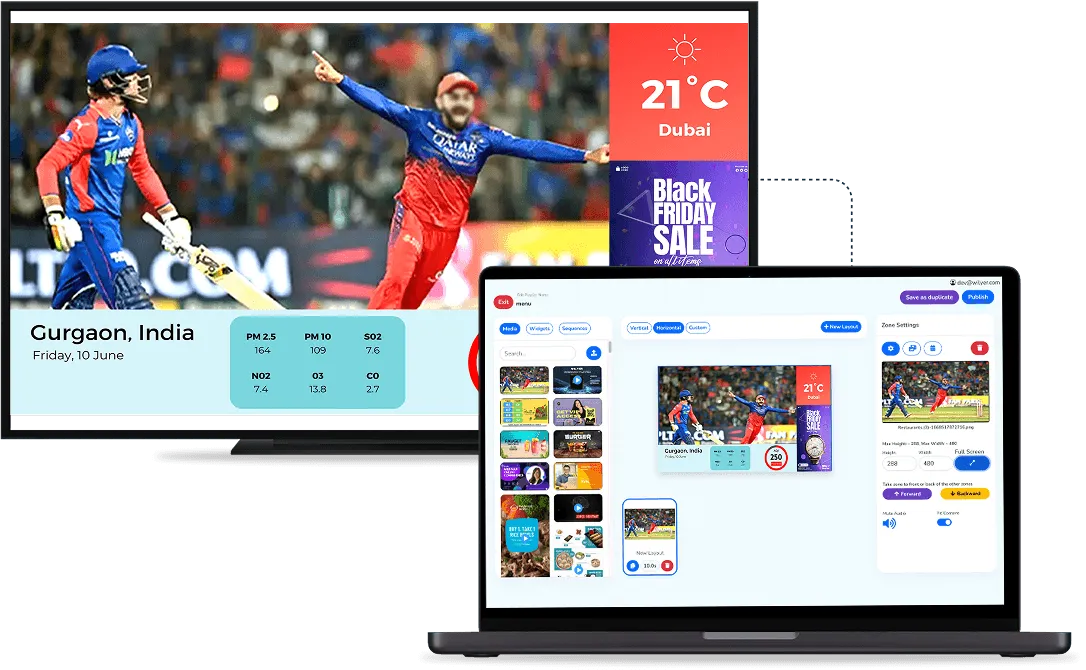
Un menú digital es un rótulo electrónico que se instala en un restaurante para mostrar de forma dinámica la carta, las promociones, los precios, videos y contenido de marca.
Un panel digital se puede actualizar en el momento desde un software en la nube, algo imposible con una carta impresa. Según la hora y la demanda, el restaurante puede mostrar automáticamente la carta de desayuno, de almuerzo o de cena, ofertas de temporada, combos o promociones por tiempo limitado.
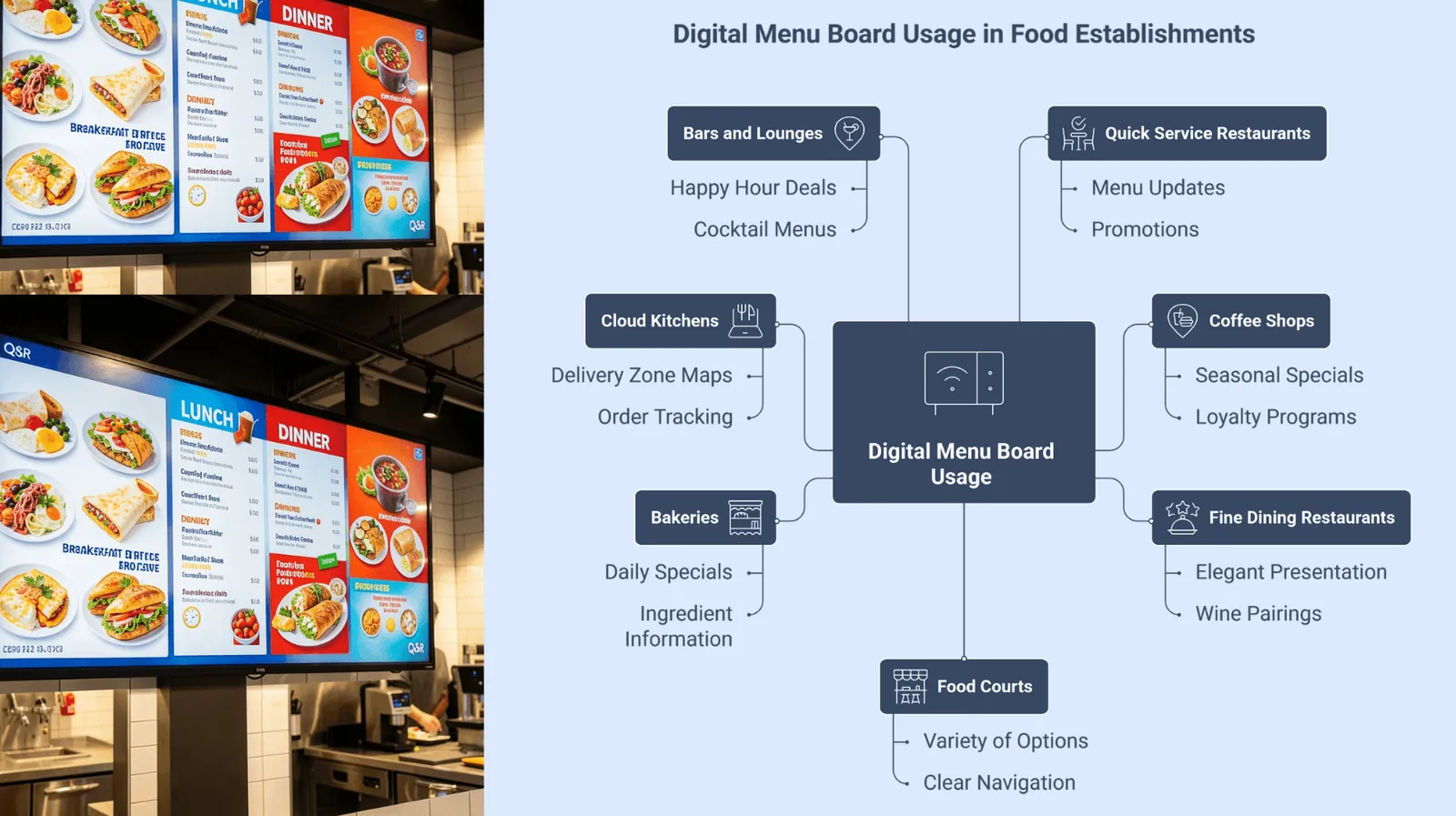
Un menú digital se usa habitualmente en:
- Restaurantes de comida rápida
Los menús digitales son una gran solución en comida rápida para acelerar los tiempos de pedido, animar al cliente a llevarse un combo, mejorar su satisfacción y manejar con más eficiencia el mucho volumen de las horas punta.
- Cafeterías
Las pantallas digitales de una cafetería muestran bebidas, bollería, bebidas de temporada y promociones especiales, y ayudan a construir un espacio moderno y visualmente atractivo.
- Restaurantes de alta cocina
En un restaurante de alta cocina, el menú digital puede mostrar platos de calidad, la carta de vinos, las sugerencias del chef y una imagen de marca cuidada, lo que enriquece la experiencia de la comida.
- Patios de comidas
Los patios de comidas usan menús digitales para atraer clientes rápido, mostrar varias categorías con claridad y ganar visibilidad en un entorno concurrido y competitivo.
- Panaderías
En una panadería la señalización digital sirve para mostrar el producto recién hecho, las tartas y la bollería, los combos y los especiales del día con imágenes llamativas que invitan a la compra por impulso.
- Cocinas ocultas
Las cocinas ocultas usan sistemas de carta digital para gestionar sus menús de pedido en línea, actualizar la disponibilidad al instante y agilizar la operación en varias plataformas de reparto.
- Bares y salas
En bares y salas, los paneles digitales anuncian visualmente los cócteles, las ofertas de la hora feliz, el programa de ocio y cualquier propuesta especial de la casa.
¿Por qué pasarse a un menú digital en 2026?
Para 2026, el sector de la restauración se habrá convertido en un ecosistema muy automatizado, personalizado y guiado por lo visual, centrado en ofrecer experiencias de cliente fluidas y eficiencia operativa.
El menú digital resuelve muchos problemas que la carta impresa no puede.
Estas son las razones principales por las que los restaurantes se están pasando.
Cambios de carta en tiempo real
Poder cambiar la carta de un momento a otro es una de las grandes ventajas del menú digital.
Un restaurante cambia a menudo:
- Los precios
- Los combos
- Los platos de temporada
- Los platos agotados
- Las promociones de la hora feliz
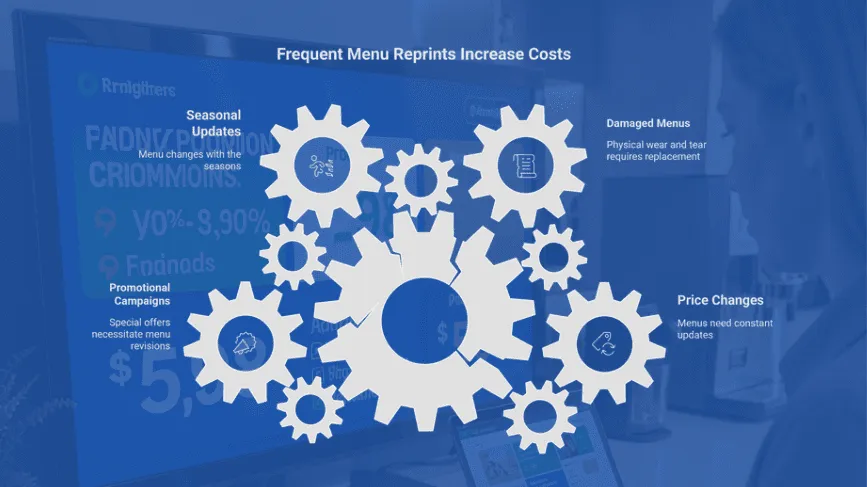
Con carta impresa, cualquier cambio implica costes altos de rediseño y reimpresión. Un sistema digital permite actualizar todas las pantallas en tiempo real desde un único punto.
Mejor experiencia del cliente
Quien viene a cenar hoy quiere una carta atractiva e informativa.
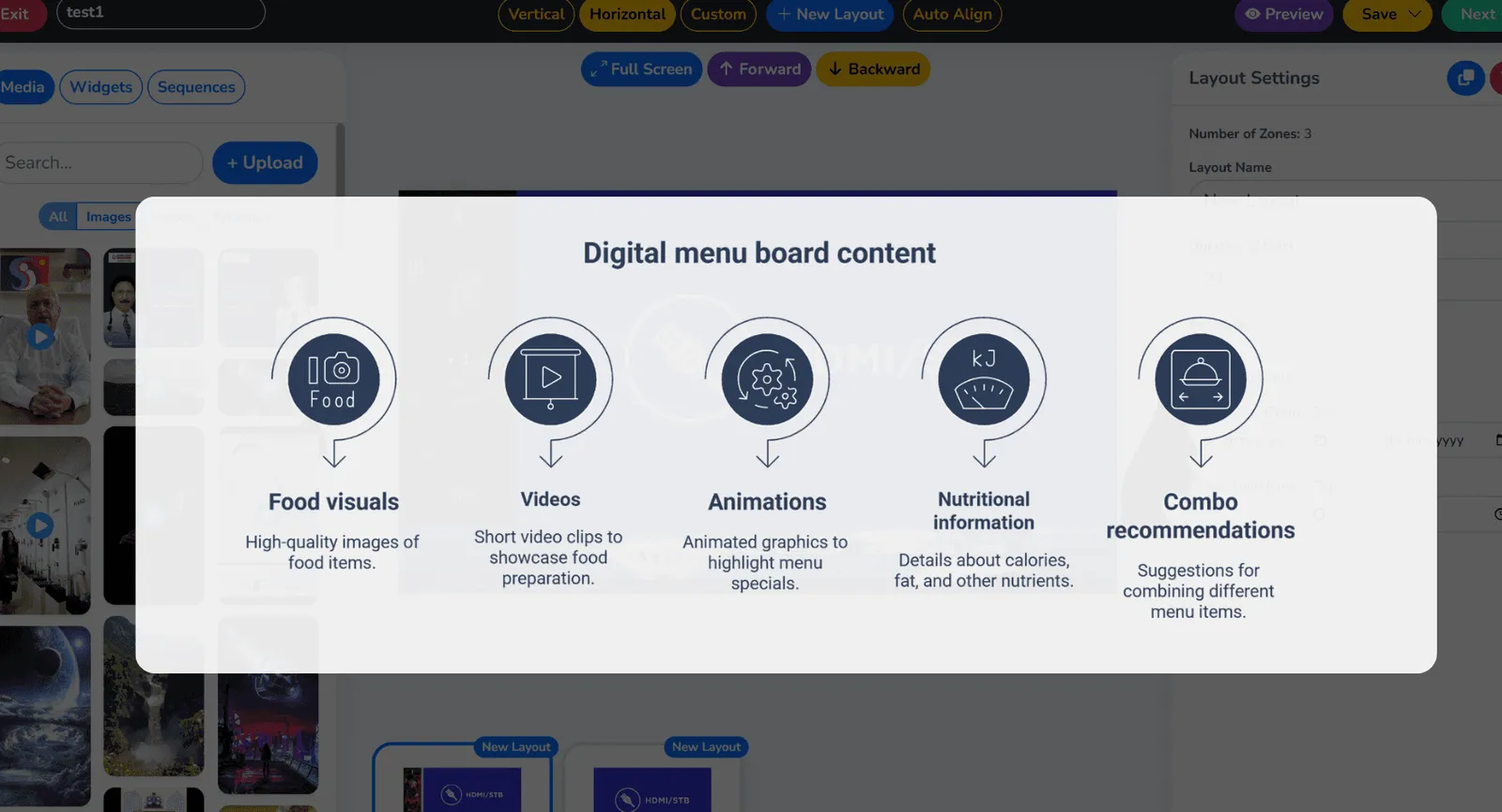
Un menú digital sirve para mostrar:
- Imágenes de calidad de los platos
El menú digital muestra imágenes de alta resolución de los platos, lo que ayuda al restaurante a captar la atención del cliente y a que la comida resulte más apetecible, y agiliza la decisión.
- Videos
Incluir videos en la carta digital de un restaurante da una experiencia más dinámica y envolvente, y permite enseñar cómo se elabora la comida, destacar los platos de la casa, las promociones y el mensaje de marca.
- Animación
El contenido animado hace que la carta digital resulte más dinámica y llamativa, mejora su visibilidad y promociona con eficacia las ofertas especiales, los combos y las promociones por tiempo limitado.
- Información nutricional
El menú digital puede mostrar con claridad las calorías, la información nutricional y los ingredientes, lo que ayuda a informar al cliente y aporta transparencia a la carta.
- Recomendaciones de combos
Los restaurantes usan la carta digital para recomendar combos y complementos de forma estratégica, lo que abre oportunidades de venta cruzada y a la vez ayuda al cliente a encontrar rápido opciones con mejor relación calidad-precio.
Todo eso aumenta la implicación del cliente y le facilita la decisión. Diversos estudios revelan que una carta bonita influye de forma notable en la decisión de compra.
Más ventas y más venta cruzada
Un menú digital es como un comercial virtual.
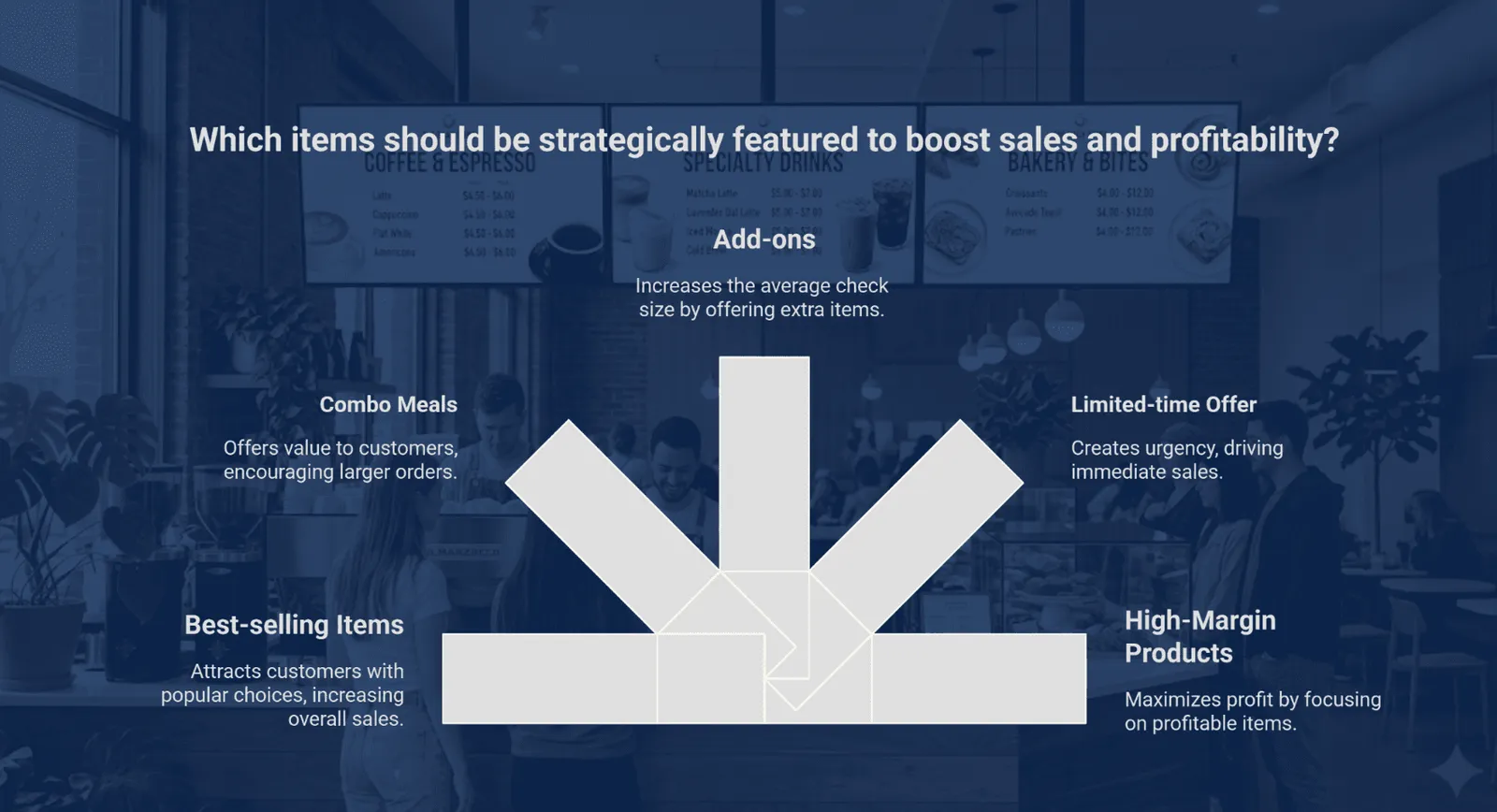
El restaurante puede destacar de forma estratégica:
- Los platos más vendidos
El menú digital puede mostrar de forma destacada algunos de los platos más vendidos de la carta, lo que capta la mirada del cliente e impulsa las ventas de los productos más populares y demandados.
- Los combos
Como el cliente ve en pantalla combinaciones de comida y precio atractivas, es más probable que pida un combo para llevarse una mejor oferta, lo que también sube el beneficio del restaurante.
- Los complementos
La carta digital es una forma estupenda de promocionar complementos - ingredientes extra, postre, bebidas o patatas - y de sacar el máximo valor a cada pedido.
- Las ofertas por tiempo limitado
El menú digital ayuda al restaurante a promocionar sus ofertas por tiempo limitado en cuanto arrancan, de modo que el cliente es más propenso a aprovechar la ocasión y comprar, y las promociones ganan eficacia.
- Los productos de mayor margen
Los platos de mayor margen se pueden colocar de forma estratégica en las pantallas del restaurante para mejorar la rentabilidad, dar realce a la oferta premium y empujar al cliente hacia las opciones más rentables.
Diversos estudios apuntan a que el menú digital puede aumentar de forma notable las oportunidades de venta cruzada y el valor medio del pedido.
Menos gasto en impresión
Una carta impresa hay que reimprimirla con regularidad por:
- Los cambios de precio
Tener los precios al día sin reimprimir la carta se resuelve fácilmente desde un solo punto, actualizando los precios en todas las pantallas del restaurante.
- Los combos
Un sistema digital puede promocionar los combos de forma dinámica: el responsable puede crear, editar o retirar una oferta sobre la marcha en función de cómo vaya la venta.
- Los platos de temporada
Las pantallas digitales permiten promocionar rápido las cartas de temporada y los especiales de fiestas, lo que capta la atención del cliente y mantiene la carta fresca y apetecible.
- Los platos agotados
El menú digital permite retirar al instante un plato agotado o no disponible, lo que evita decepciones y mejora la exactitud del pedido en las horas de más trabajo.
El menú digital elimina el gasto recurrente de impresión y a cambio ofrece actualizaciones ilimitadas.
Pedidos más rápidos y más eficiencia
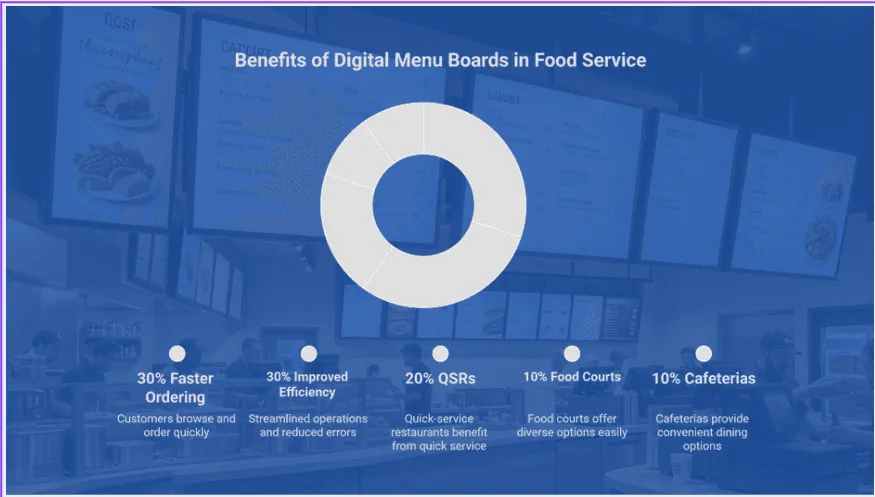
El menú digital ayuda al cliente a leer la carta y a pedir con rapidez.
Eso resulta especialmente útil en:
- Comida rápida
- Patios de comidas
- Cafeterías de autoservicio
Un diseño digital simplificado reduce la confusión y mejora el flujo de clientes en las horas punta.
Gestión multiubicación
A una cadena de restaurantes le puede costar mantener una marca coherente, unos precios y una carta exactos en varios locales. La carta impresa tiende a generar discrepancias y desfases entre sucursales. Un sistema de señalización digital centralizado ayuda al negocio a garantizar un mensaje de marca coherente y una experiencia de cliente fluida en todas sus ubicaciones.
Control centralizado del contenido
Las plataformas de señalización digital permiten al dueño del restaurante editar, actualizar y controlar a distancia todas las cartas, promociones y contenidos de marca. Eso elimina errores, ahorra tiempo y permite hacer cambios rápidos cuando toca una oferta de temporada o una subida de precios. Es decir, una cadena puede optimizar, ganar coherencia y simplificar su operación en muchos locales.
IA y automatización inteligente
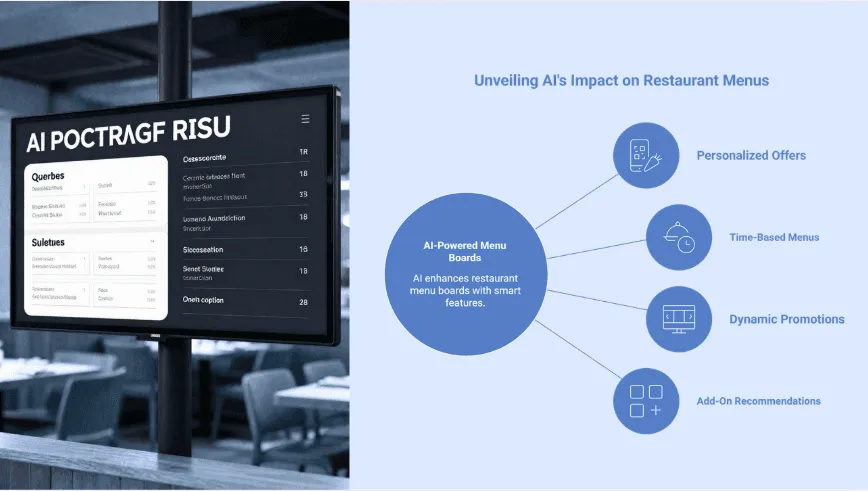
En 2026, las cartas digitales con IA están ganando popularidad.
La IA ya ayuda a un restaurante a:
- Sugerir ofertas personalizadas
- Mostrar cartas según la hora
- Ajustar las promociones de forma dinámica
- Recomendar complementos
La señalización con IA afina la segmentación de clientes y mejora la conversión.
Carta impresa frente a menú digital
| Característica | Carta impresa | Menú digital |
|---|---|---|
| Actualizaciones | Hay que reimprimir | Inmediatas |
| Eficiencia en costes | Costes recurrentes altos | Ahorro a largo plazo |
| Atractivo visual | Estático | Dinámico y con gancho |
| Promociones | Limitadas | Campañas en tiempo real |
| Conexión con el cliente | Básica | Experiencia interactiva |
| Control multiubicación | Difícil | Gestión centralizada |
| Capacidad de venta cruzada | Baja | Alta |
| Analítica | No disponible | Seguimiento del rendimiento |
Ventajas de la carta digital para un restaurante
Las ventajas de la carta digital no son solo estéticas. Mejoran la operación del restaurante, su marca y su rentabilidad.
Entre las principales:
- Flexibilidad en tiempo real
- Servicio más rápido
- Marca más sólida
- Mejor conexión con el cliente
- Analítica inteligente
- Mejor venta cruzada
- Menos desperdicio
- Gestión de contenido en remoto
La señalización digital en restauración da más control y mejora la comunicación con el cliente.
Las ventajas de la carta digital en 2026
Hoy las ventajas de una carta digital se están volviendo imprescindibles para cualquier negocio de comida.
Entre las principales:
- Más ingresos
- Pedidos más exactos
- Mejor fidelización
- Oportunidades de marketing dinámico
- Menores costes operativos
- Una experiencia de comida modernizada
- Campañas que se lanzan más rápido
- Mejor percepción de la marca
El menú digital ya no es solo una pantalla: es una herramienta de crecimiento del negocio.
Tendencias de futuro en los menús digitales de restaurante
El futuro de la tecnología en restauración gira en torno a la automatización inteligente y a las experiencias envolventes.
La tendencia que dominará 2026:
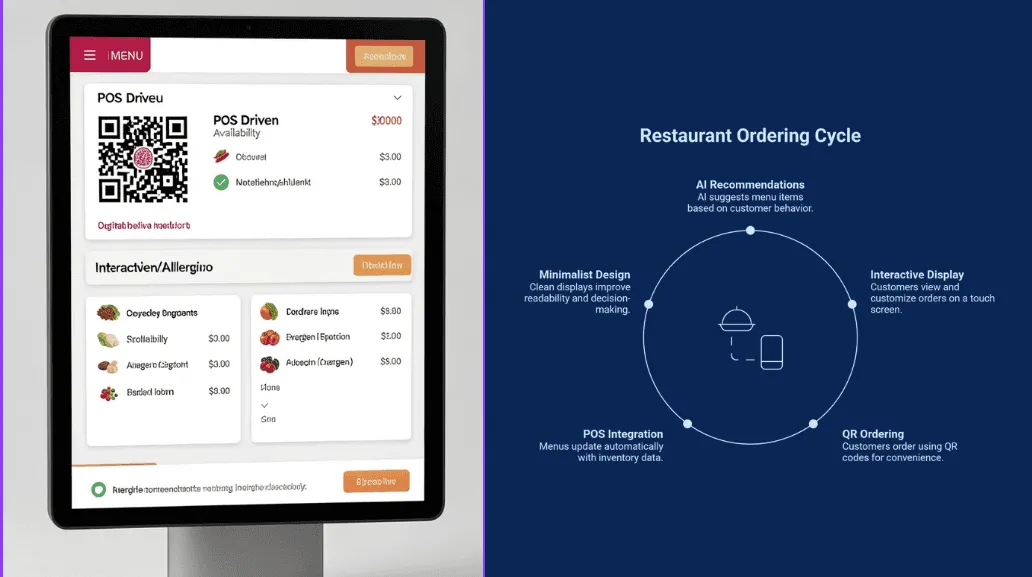
- Recomendaciones con IA
El comportamiento del cliente y la hora del día marcan las sugerencias automáticas de combos y complementos.
- Pantallas táctiles interactivas
Ingredientes, calorías, alérgenos y opciones de personalización se pueden consultar y manejar desde una interfaz pensada para el cliente.
- Integración con códigos QR
El pedido por QR y el menú digital van de la mano en un restaurante para que pedir sea fluido.
- Integración con el TPV
La carta se actualiza sola según el inventario y los datos del TPV.
- Diseño de carta minimalista
Los restaurantes actuales están adoptando pantallas limpias y despejadas para mejorar la legibilidad y ayudar al cliente a decidir.
- Recomendaciones con IA
El comportamiento del cliente y la hora del día marcan las sugerencias automáticas de combos y complementos.
- Pantallas táctiles interactivas
Ingredientes, calorías, alérgenos y opciones de personalización se pueden consultar y manejar desde una interfaz pensada para el cliente.
- Integración con códigos QR
El pedido por QR y el menú digital van de la mano en un restaurante para que pedir sea fluido.
- Integración con el TPV
La carta se actualiza sola según el inventario y los datos del TPV.
- Diseño de carta minimalista
Los restaurantes actuales están adoptando pantallas limpias y despejadas para mejorar la legibilidad y ayudar al cliente a decidir.
Los problemas de la carta impresa en un restaurante actual
La carta impresa genera varias limitaciones operativas:
- Actualizaciones caras
- Promociones que tardan en salir
- Imagen de marca desfasada
- Gestión multiubicación complicada
- Poca conexión con el cliente
- Ni analítica ni seguimiento
En cambio, un sistema de carta digital aporta flexibilidad, automatización y capacidad de crecer.
Cómo ayuda Wilyer a los restaurantes con sus menús digitales
Wilyer ayuda a los restaurantes a modernizar su comunicación con el cliente mediante soluciones punteras de señalización digital para restaurantes, cafeterías y empresas de restauración.
Wilyer ofrece una herramienta sólida para facilitar la gestión del restaurante y mejorar la interacción con el cliente.
Funciones clave de Wilyer
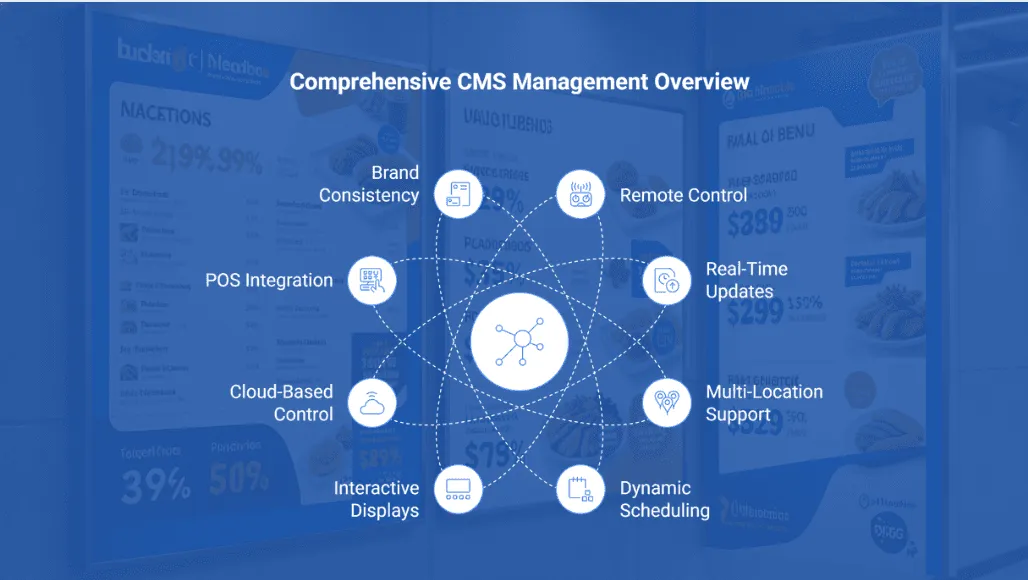
Todas tus pantallas de carta se controlan a distancia desde un único panel.
Precios, promociones y cambios de carta siempre al día en todas las pantallas.
Ideal para negocios como restaurantes y cadenas con varias sucursales.
El restaurante actualiza automáticamente las cartas de desayuno, almuerzo, cena y temporada.
Wilyer admite pantalla táctil e interacción con el cliente.
Con tecnología en la nube, el responsable del restaurante controla la señalización desde cualquier lugar.
Conecta la carta con el TPV para automatizar inventario y precios
Mantén una marca, unos gráficos y un marketing coherentes en toda tu red de locales.
Por qué los restaurantes prefieren Wilyer
Los restaurantes eligen Wilyer por la combinación que les ofrece de:
- Software fácil de usar
- Soluciones de señalización que crecen
- Infraestructura fiable en la nube
- Gestión profesional de pantallas
- Automatización avanzada
Ya sea una sola cafetería o una gran cadena de restaurantes, Wilyer ayuda a ofrecer experiencias de cliente con gancho reduciendo la complejidad operativa.
Los negocios que más partido sacan a un menú digital
El menú digital resulta enormemente eficaz en:
- Restaurantes de comida rápida
- Cafeterías
- Restaurantes de alta cocina
- Heladerías
- Panaderías
- Food trucks
- Cafeterías de autoservicio
- Restaurantes de hotel
- Cocinas ocultas
- Bares y pubs
La señalización digital es una gran solución para mejorar la eficiencia y la interacción con el cliente en cualquier negocio de comida.
Consejos para implantar un menú digital con éxito
Usa imágenes de calidad de los platos
Unas fotos profesionales abren el apetito y mejoran la conversión.
Mantén un diseño limpio
Simplifica la carta y hazla fácil de leer.
Destaca los más vendidos
Impulsa los platos rentables, pero hazlo con criterio
Programa la carta por franjas
Cambia automáticamente entre desayuno, almuerzo y cena según la hora.
Integra el TPV
Inventario y precios automatizados
Usa las animaciones con cuidado
Las animaciones deben servir para dar visibilidad, no para distraer al cliente.
Conclusión
En 2026 el sector de la restauración será más digital, más automatizado y más centrado en el cliente. La carta impresa tradicional ya no puede competir con la flexibilidad, el atractivo y la eficiencia de un menú digital.
Desde mejorar la experiencia del cliente hasta aumentar las ventas y reducir costes operativos, las ventajas son innegables.
Los restaurantes que se pasan hoy al menú digital se colocan en posición de crecer a largo plazo, de reforzar su marca y de ganar más.