

La señalización digital está cambiando a toda velocidad la forma en que clínicas y hospitales pequeños se comunican con sus pacientes. Un buen sistema de señalización para clínicas pequeñas puede aumentar mucho la eficiencia operativa y la satisfacción del paciente en un entorno donde el tiempo, la claridad y la comodidad son lo más importante. Dado que se ha comprobado que la señalización digital reduce la percepción del tiempo de espera y mejora la comunicación y la imagen de marca, se ha vuelto un elemento crítico de la infraestructura sanitaria actual, también en los centros más pequeños.
Introducción a la señalización digital en sanidad
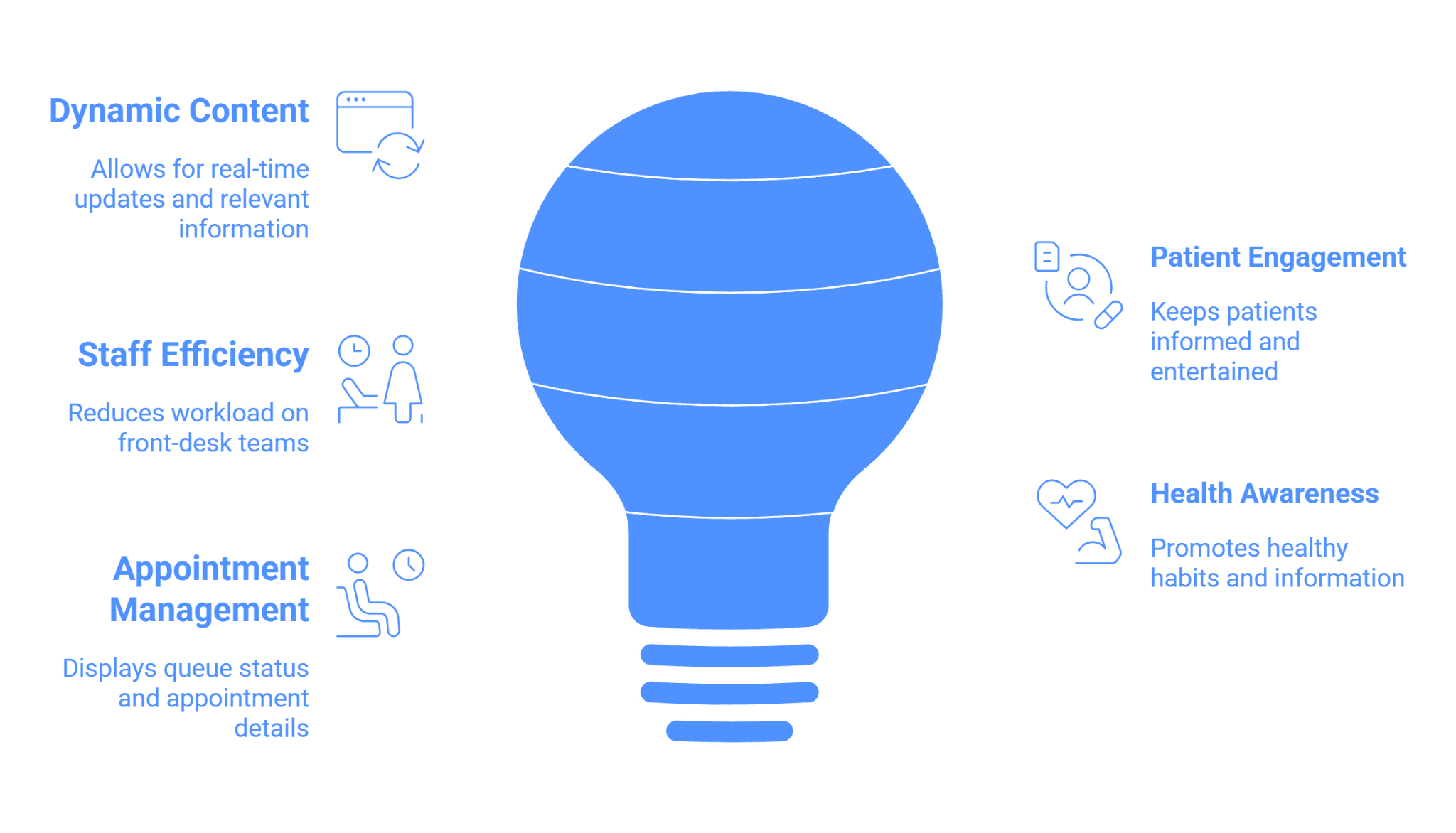
La señalización digital en una clínica consiste en usar pantallas - pantallas LED, paneles LCD, quioscos interactivos - para mostrar contenido dinámico. A diferencia de los carteles de siempre o los avisos impresos, las pantallas digitales permiten a la clínica actualizar la información sobre la marcha, de modo que el paciente vea siempre datos exactos y pertinentes.
En clínicas pequeñas y consultas médicas, donde el personal suele ser escaso, la señalización digital cumple una doble función: informa al paciente y a la vez descarga de trabajo al mostrador de recepción. Ya sea mostrando la cola de citas o difundiendo mensajes de salud, actúa como un ayudante silencioso que trabaja sin parar.
Por qué una clínica pequeña necesita señalización digital
- Mejorar la experiencia del paciente
Uno de los factores más importantes en sanidad es la experiencia del paciente. La espera puede generar frustración, sobre todo cuando en una clínica pequeña hay pocas sillas o poco personal. Al ofrecer contenido informativo y útil - consejos de salud, videos de bienestar, comunicados -, la señalización digital también reduce la percepción del tiempo de espera.
- Descargar de trabajo la recepción
En una clínica, el personal de recepción atiende continuamente las mismas preguntas: «¿cuándo me toca?», «¿qué médico está disponible?». Las pantallas digitales responden solas a esas preguntas, porque actualizan la cola y muestran el horario de los médicos, de modo que el personal puede concentrarse en otras tareas importantes.
- Crear un ambiente profesional
Un sistema de señalización moderno en una consulta mejora el aspecto general de la clínica. Transmite profesionalidad, genera confianza y da al paciente seguridad sobre la calidad de la atención que va a recibir.
- Mejorar la comunicación
Las urgencias, los cambios en la disponibilidad de los médicos o los avisos importantes se pueden transmitir de inmediato y sin malentendidos. Eso garantiza transparencia y un funcionamiento fluido.
Componentes clave de un sistema de pantallas para clínica
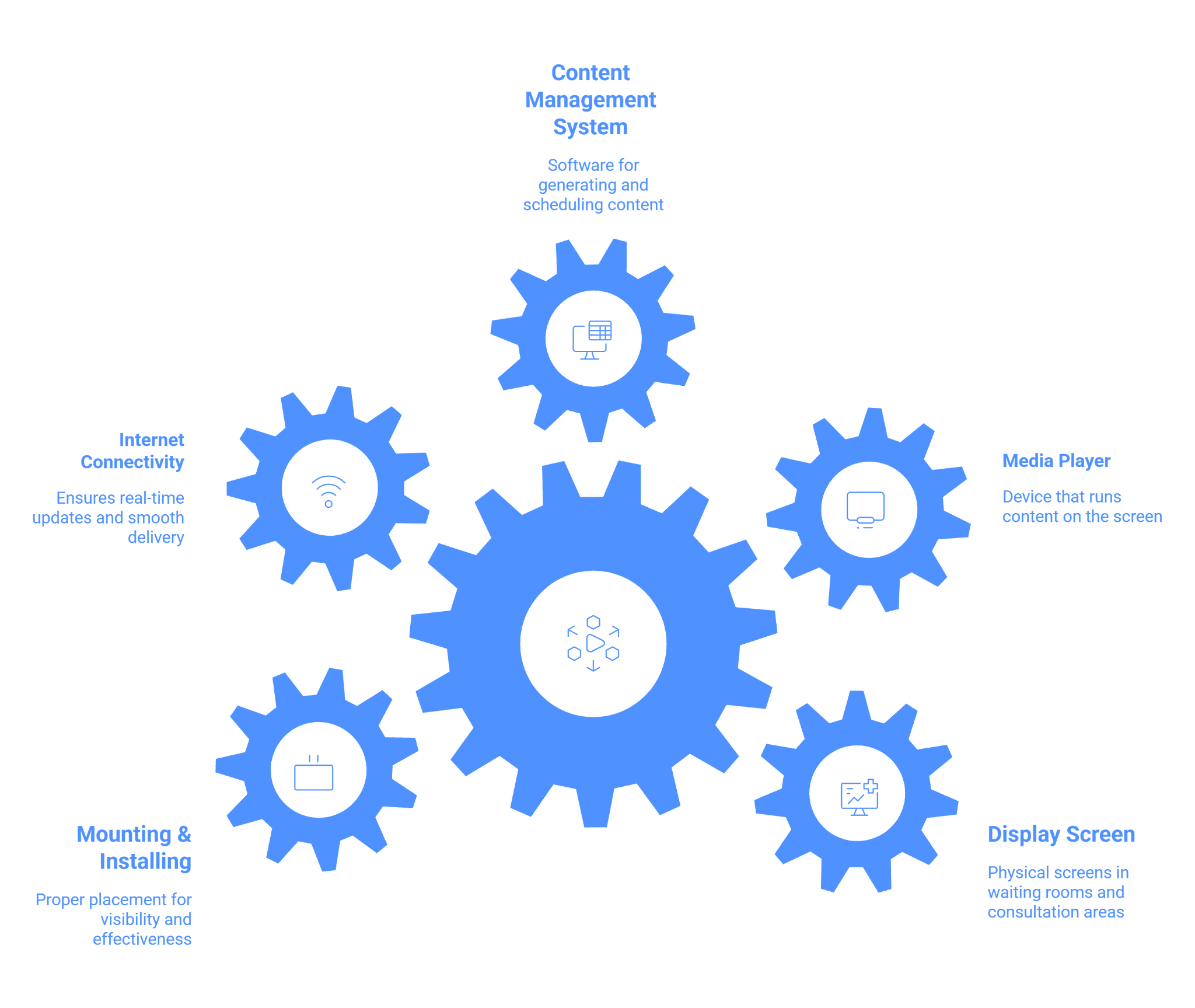
La pantalla
Son las pantallas físicas situadas en las salas de espera, la recepción, las consultas o la farmacia. El brillo y el tamaño deben elegirse según el espacio y la luz.
El reproductor multimedia
El reproductor multimedia es el equipo que hace funcionar el contenido en la pantalla. Puede ser un dispositivo externo o venir integrado en las pantallas inteligentes.
El sistema de gestión de contenido (CMS)
Cualquier solución de señalización se apoya en el CMS. Permite al personal de la clínica crear, programar y actualizar el contenido desde fuera del centro.
La conexión a internet
Una conexión estable (wifi o LAN) garantiza actualizaciones en tiempo real y una entrega de contenido sin cortes.
El montaje y la instalación
La pantalla debe colocarse bien para que se vea y resulte eficaz. Según la distribución de la clínica se pueden usar soportes de pared, pies o anclajes de techo.
Tipos de señalización digital que se usan en una clínica
Pantallas de sala de espera
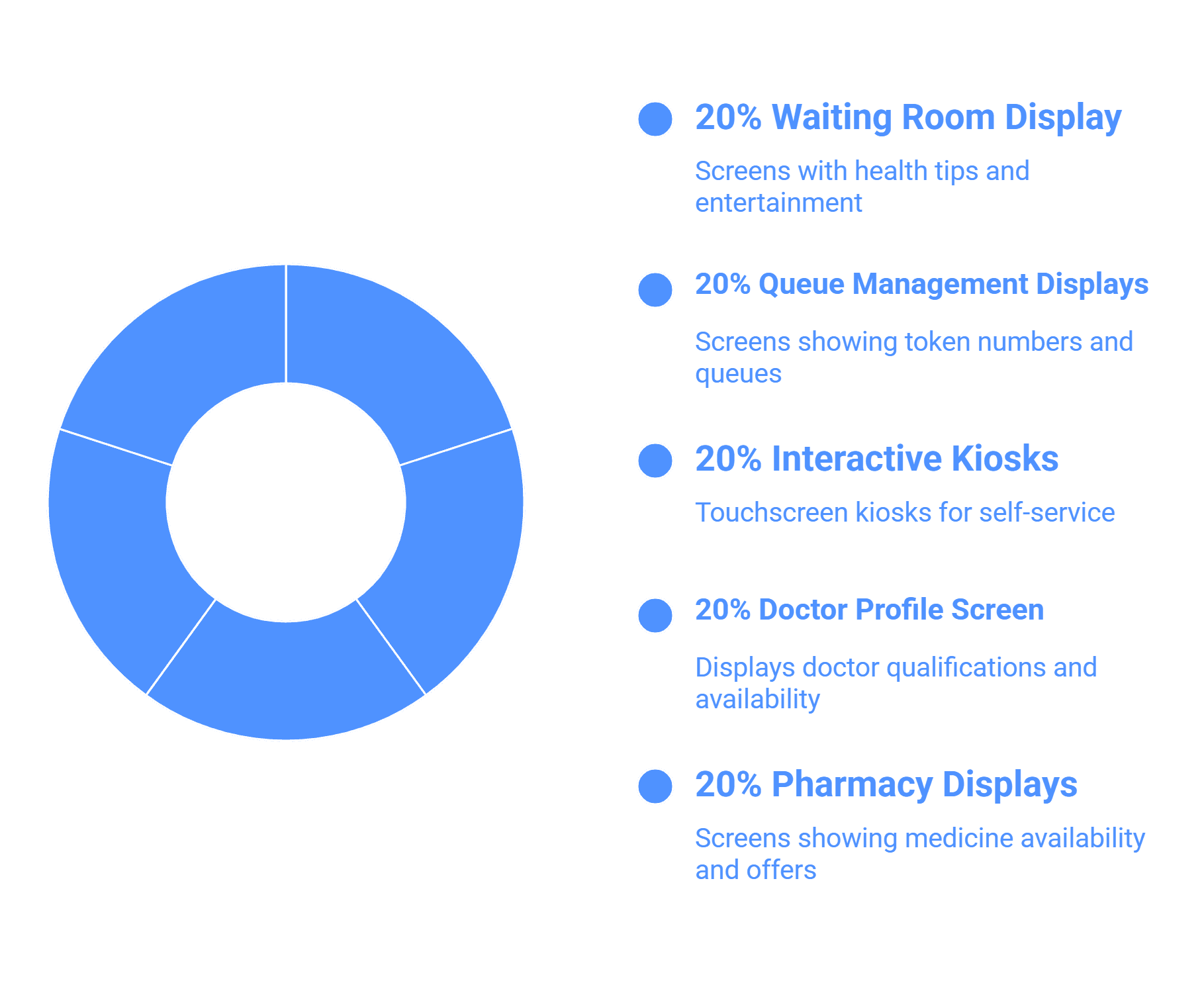
Son las pantallas con las que el paciente convive más tiempo. Conviene que incluyan consejos de salud, información sobre la clínica y contenido de entretenimiento.
Pantallas de gestión de turnos
Estas pantallas muestran los números de turno y la cola de citas, lo que reduce los malentendidos y mejora la experiencia del paciente.
Quioscos interactivos
Los quioscos táctiles permiten al paciente registrarse, pedir cita o consultar información sin necesidad de que le atienda el personal.
Pantallas de perfil médico
Estas pantallas muestran la titulación, la especialidad y la disponibilidad de cada médico, lo que ayuda a generar confianza en el paciente.
Pantallas de farmacia
Se usan para mostrar disponibilidad de medicamentos, ofertas o instrucciones.
Ventajas de la señalización digital en una clínica pequeña
Mejor conexión con el paciente
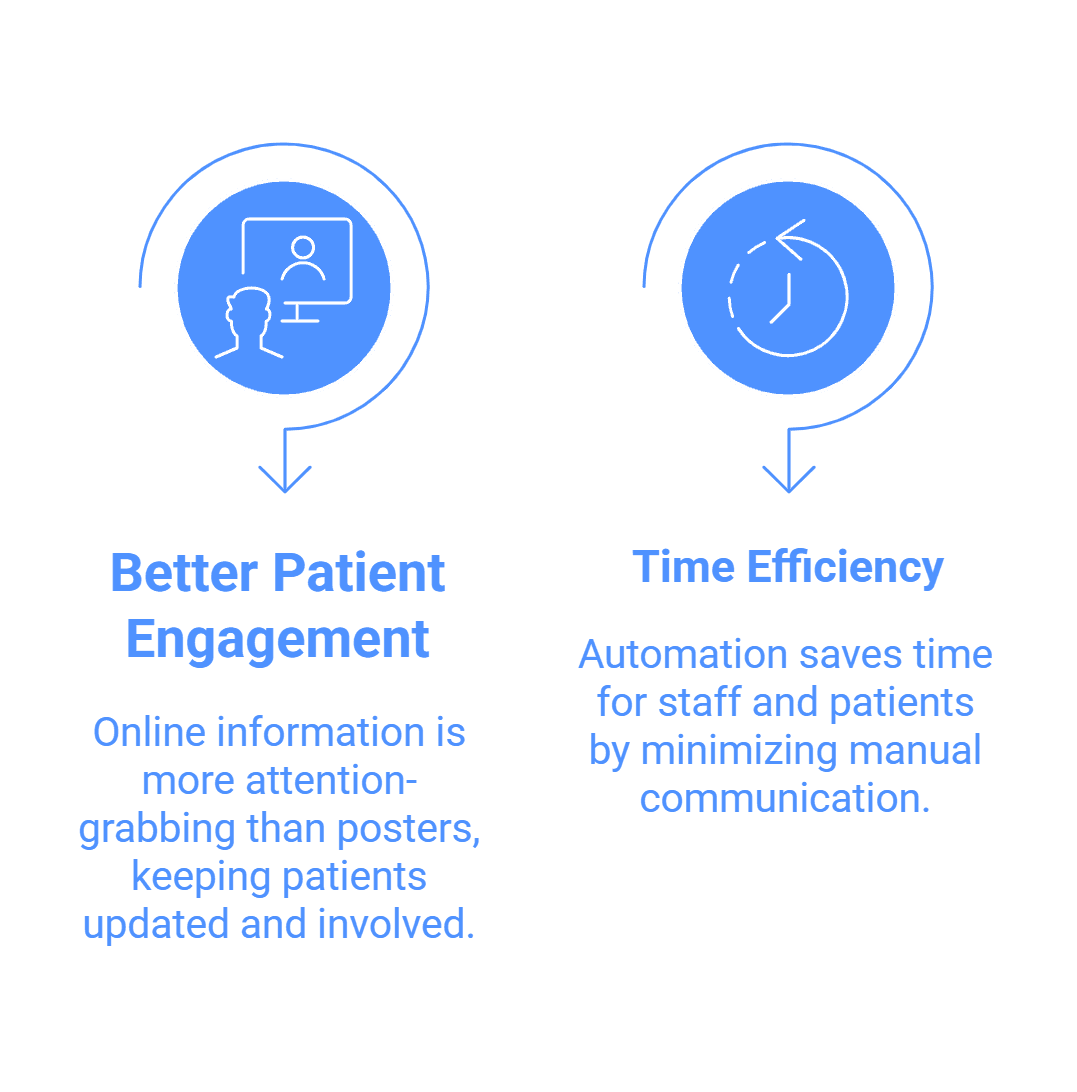
La información en pantalla llama más la atención que un cartel, de modo que el paciente se mantiene informado e implicado.
Ahorro de tiempo
La automatización ahorra tiempo tanto al personal como al paciente, porque reduce la comunicación manual.
Rentable a largo plazo
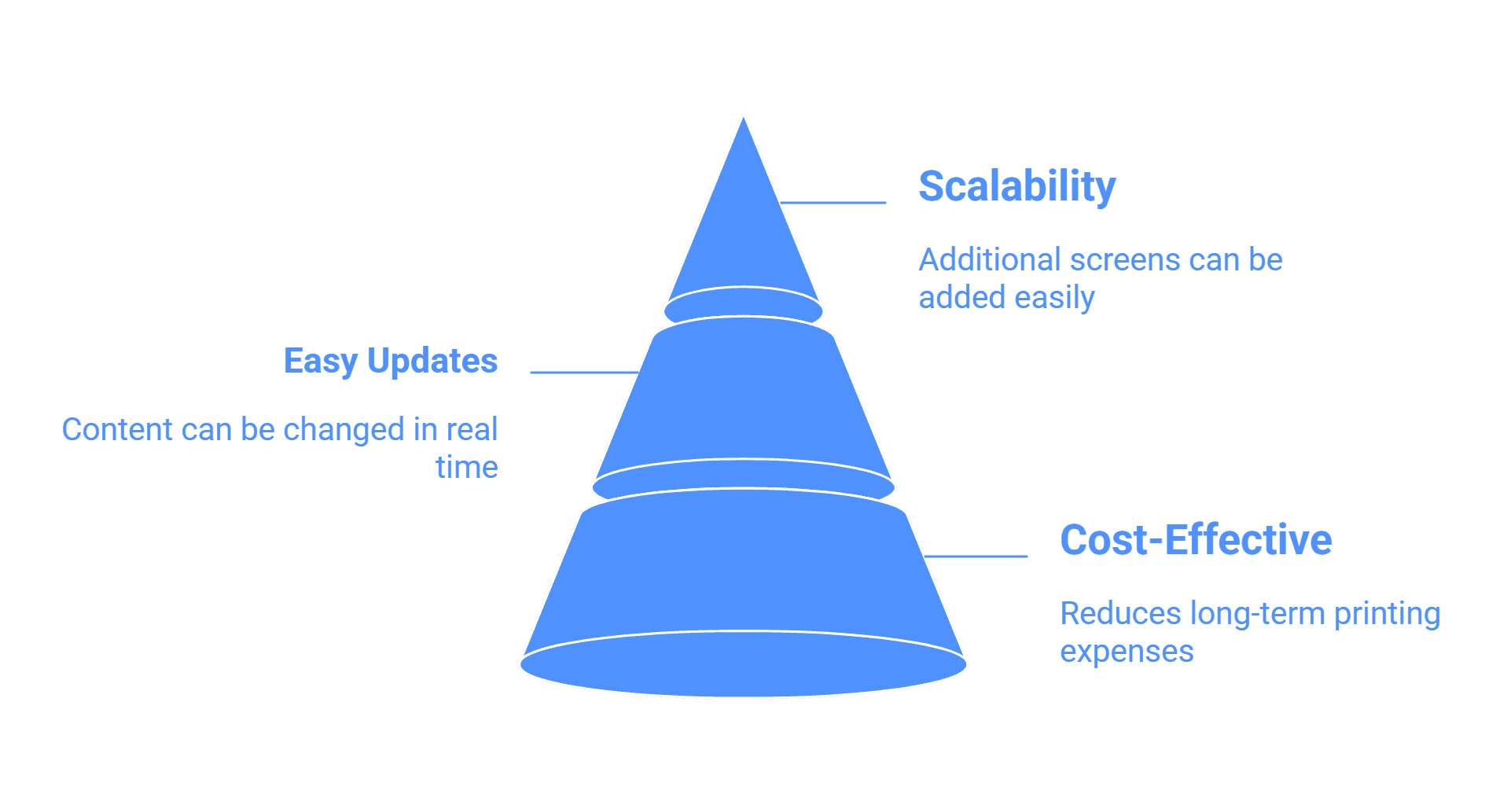
Aunque la señalización digital exige un desembolso inicial, elimina el gasto repetido en impresión.
Contenido fácil de actualizar
No hay que reponer material físico, porque el contenido se actualiza en tiempo real.
Capacidad de crecer
A medida que la clínica crece se pueden sumar pantallas sin grandes cambios de infraestructura.
Ideas de contenido para la señalización digital de una clínica
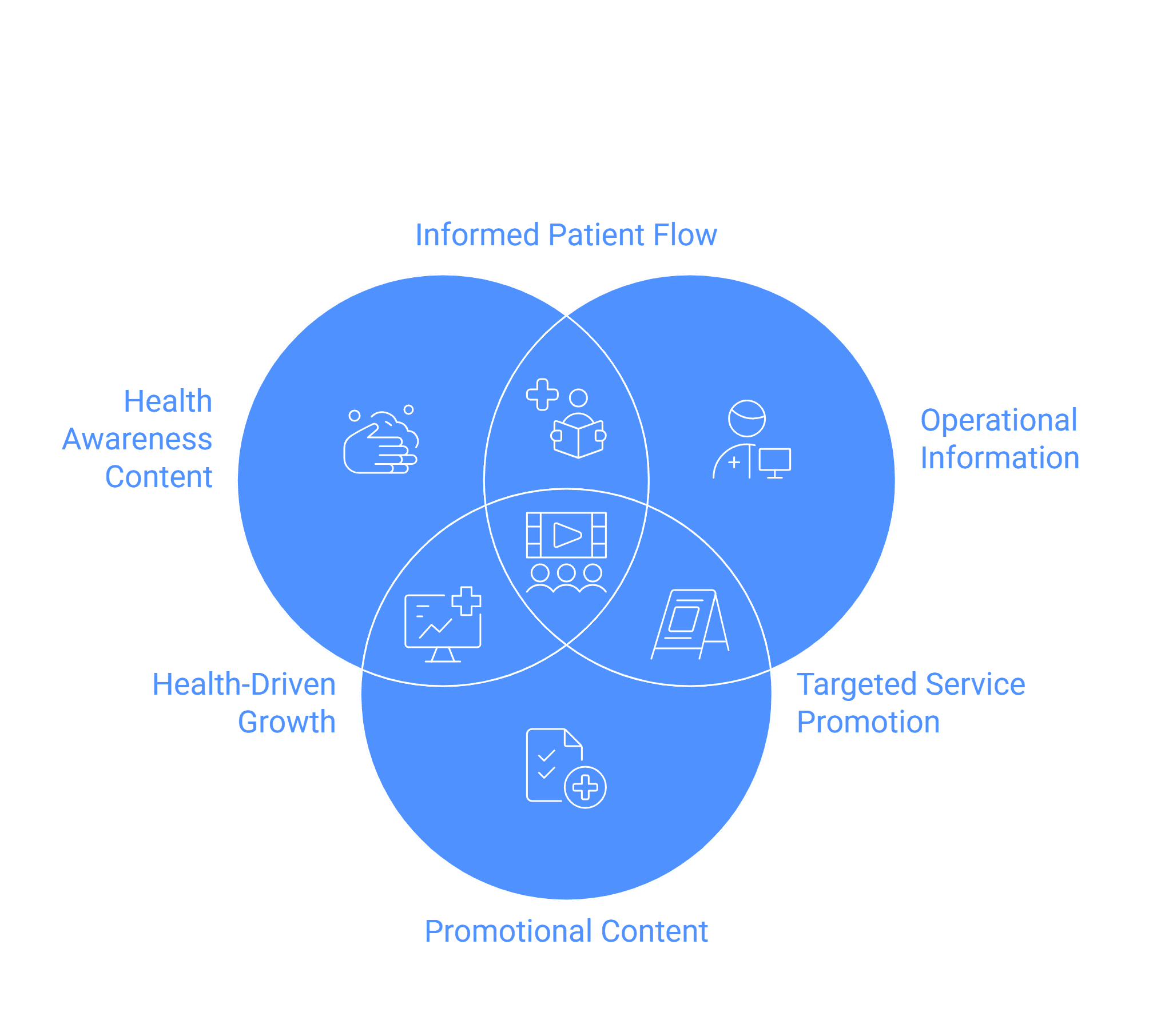
Contenido de concienciación sanitaria
Muestra consejos sobre higiene, nutrición y prevención de enfermedades.
Horarios médicos
Muestra la disponibilidad en tiempo real de médicos y especialistas.
Videos de educación al paciente
Informa al paciente sobre procedimientos, tratamientos y prevención.
Comunicados
Comparte el horario de la clínica, los días festivos o avisos importantes.
Contenido promocional
Destaca nuevos servicios, paquetes o campañas de salud.
Cómo elegir la mejor señalización digital para tu clínica
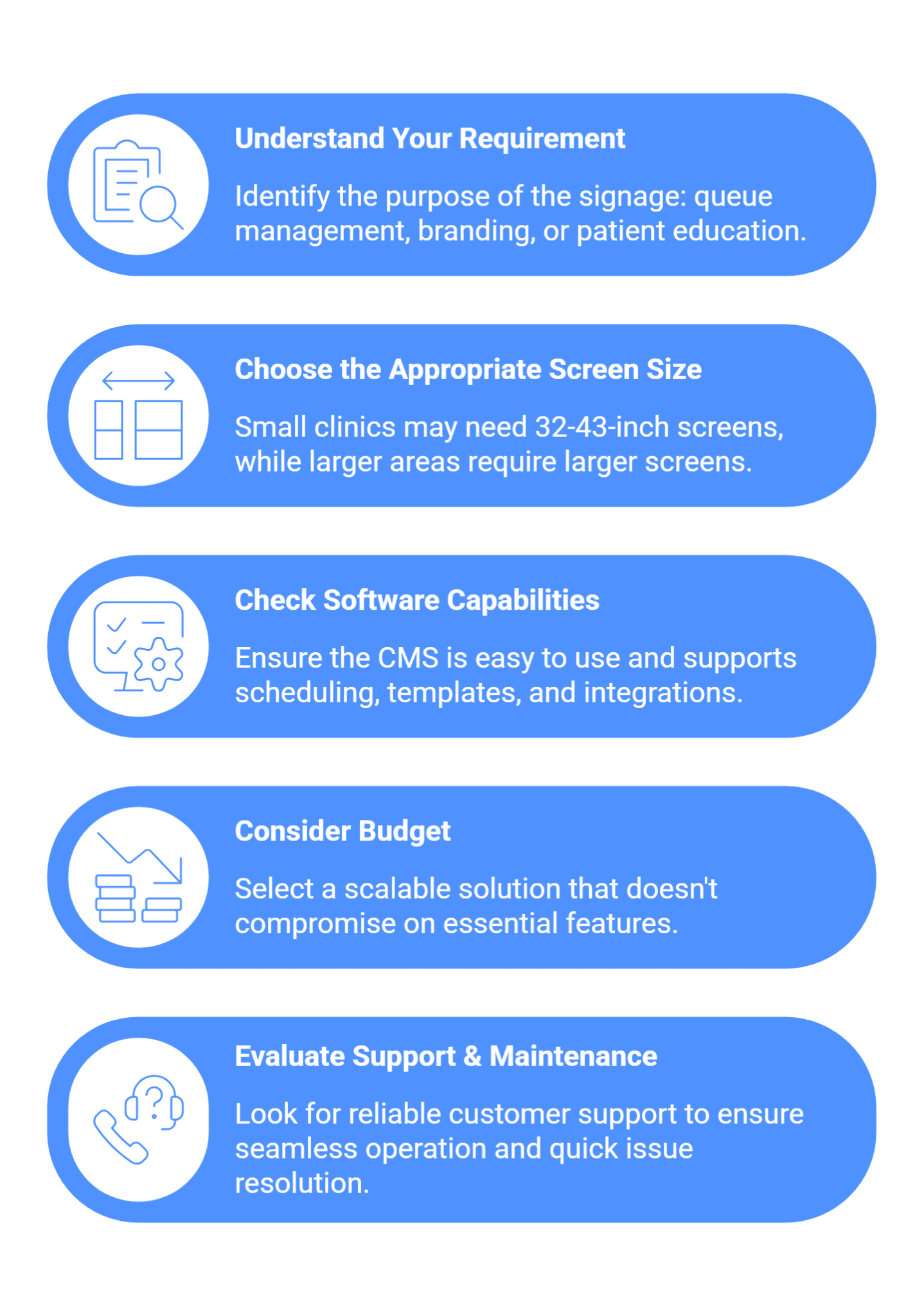
Ten clara tu necesidad
Identifica si necesitas señalización para gestionar turnos, para imagen de marca o para educar al paciente.
Elige el tamaño de pantalla adecuado
Una clínica pequeña puede necesitar pantallas de 32 a 43 pulgadas; los espacios grandes, pantallas mayores.
Comprueba lo que hace el software
Asegúrate de que el CMS sea fácil de usar y admita programación, plantillas e integraciones.
Piensa en el presupuesto
Elige una solución que pueda crecer sin renunciar a las funciones clave.
Valora el soporte y el mantenimiento
Un soporte fiable da tranquilidad: facilita un funcionamiento continuo y una resolución rápida de las incidencias.
Guía de instalación y puesta en marcha
Paso 1: planifica dónde va la pantalla
Elige los puntos más visibles, como la sala de espera y la recepción.
Paso 2: elige el hardware
Elige pantallas, reproductores y soportes según lo que necesites.
Paso 3: prepara la conectividad
Asegúrate de tener una conexión a internet estable por wifi o LAN.
Paso 4: instala el software de CMS
Configura el sistema de gestión de contenido y carga el contenido inicial.
Paso 5: prueba el sistema
Haz pruebas para comprobar que todo se ejecuta y se muestra correctamente.
Problemas habituales y cómo resolverlos
Presupuesto ajustado
Empieza con una o dos pantallas y ve creciendo poco a poco.
Problemas técnicos
Elige un buen proveedor, con buen soporte.
Gestión del contenido
Usa plantillas prediseñadas para simplificar la creación de contenido.
Formación del personal
Elige sistemas fáciles de usar que no requieran mucha formación.
Wilyer: señalización digital inteligente para clínicas
Wilyer es una solución de señalización digital potente y pensada para clínicas, hospitales pequeños y centros médicos. Ofrece una solución completa, tanto en gestión de contenido como en control de pantallas, lo que la hace ideal para el entorno sanitario actual.
Funciones clave de Wilyer
- Un único panel para controlar varias pantallas
- Programación y actualización sencillas del contenido
- Plantillas prediseñadas para sanidad
- Conexión con el sistema de gestión de colas (QMS)
- Todas las orientaciones de pantalla (vertical y horizontal)
- Acceso a la gestión en remoto desde la nube
Por qué Wilyer es ideal para clínicas pequeñas
Wilyer se centra en la sencillez y en la capacidad de crecer, lo que la hace perfecta para clínicas con poca experiencia técnica. Reduce el trabajo manual, mejora la comunicación y enriquece la experiencia del paciente.
Tendencias de futuro en la señalización digital sanitaria
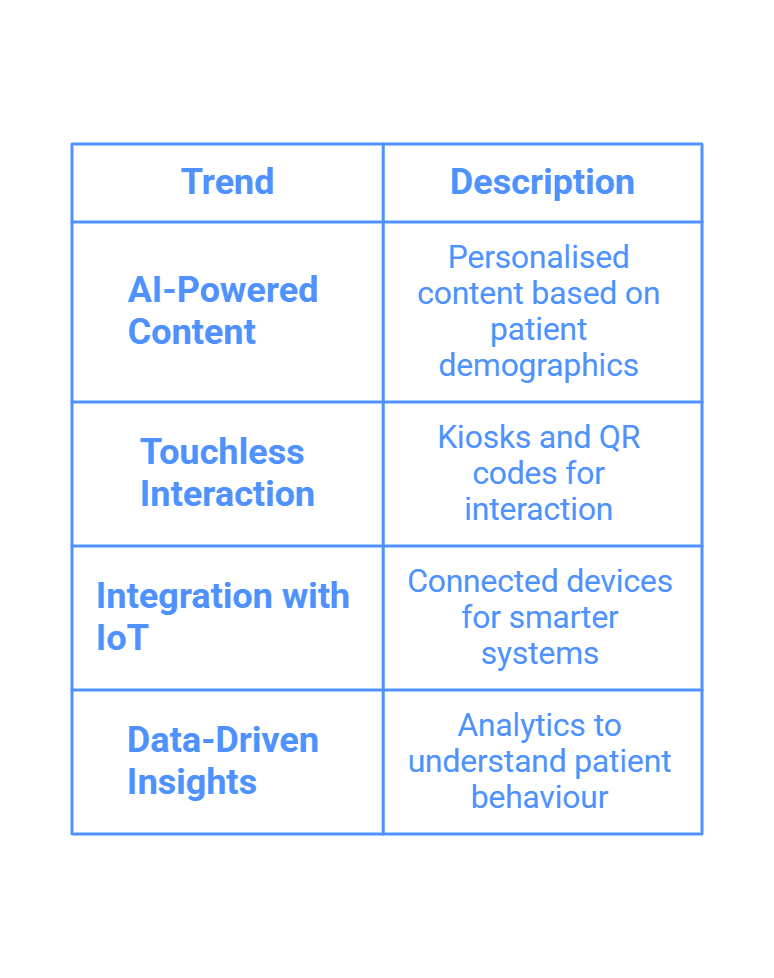
Contenido con IA
Los sistemas del futuro usarán IA para mostrar contenido personalizado según el perfil del paciente.
Interacción sin contacto
Tras la pandemia, los quioscos sin contacto y las interacciones por código QR se están popularizando.
Integración con el IoT
Los dispositivos conectados darán pie a sistemas de señalización más inteligentes y con mejor capacidad de respuesta.
Decisiones guiadas por datos
La analítica ayudará a las clínicas a entender el comportamiento del paciente y a mejorar sus estrategias de comunicación.
Conclusión
La señalización digital está transformando la forma de gestionar hospitales pequeños y clínicas. Aporta un montón de ventajas frente a las prácticas convencionales: mejor experiencia del paciente, comunicación más fácil y una imagen de marca más sólida.
Con un buen sistema de pantallas y soluciones como Wilyer, un centro sanitario puede hacer que su entorno sea más eficiente, más atractivo y más amable con el paciente. A medida que avance la tecnología, la señalización digital será una herramienta imprescindible para las clínicas que quieran ofrecer mejor atención y mantenerse por delante en el sector.