
Introducción
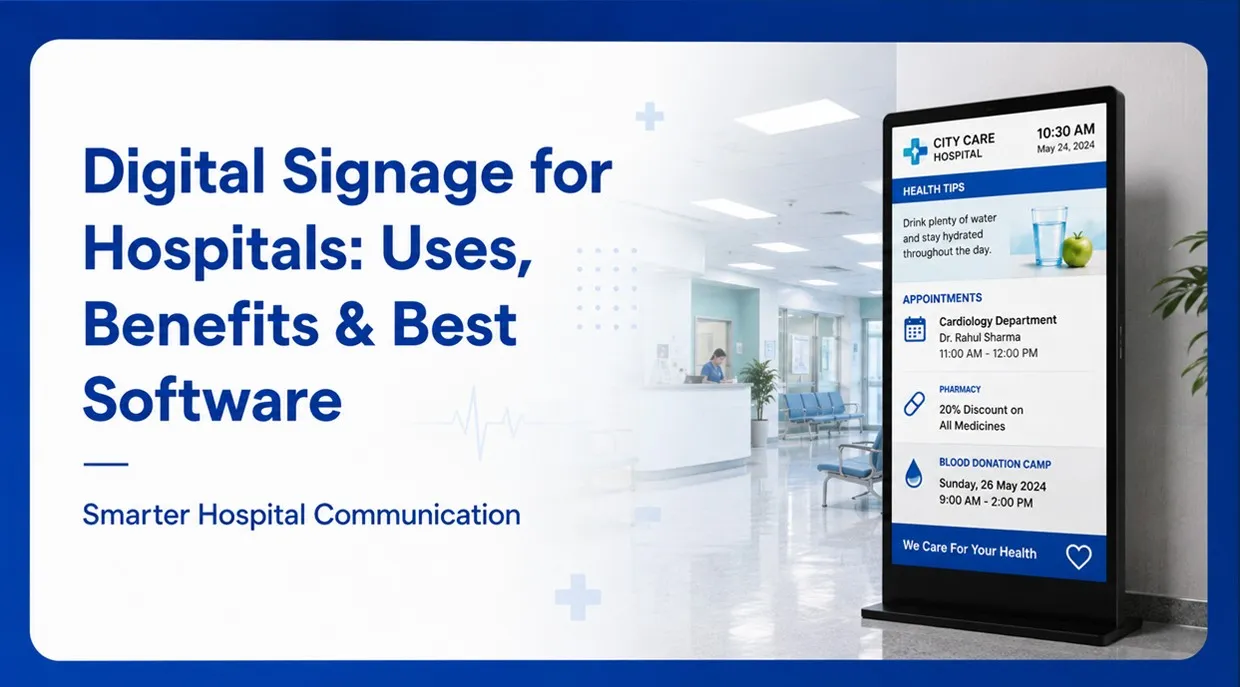
Los entornos sanitarios evolucionan a gran velocidad, no solo en el uso de la tecnología médica, sino también en la forma de comunicar la información a pacientes, visitantes y personal. Los sistemas de comunicación convencionales, como los avisos en papel y los tableros fijos, pueden resultar poco eficaces en un hospital, donde el tiempo, la claridad y la eficiencia son primordiales. Ahí es donde la señalización digital hospitalaria cumple un papel transformador.
Las soluciones de señalización digital ofrecen una comunicación dinámica y en tiempo real a través de pantallas instaladas en distintos puntos de contacto del hospital: salas de espera, pasillos, mostradores de recepción y habitaciones. Estos sistemas, también conocidos como sistemas de pantallas hospitalarias, se están convirtiendo en una pieza esencial de la infraestructura sanitaria moderna. Mejoran el nivel de comunicación, reducen la percepción del tiempo de espera y elevan la experiencia global del paciente.
¿Qué es la señalización digital en un hospital?
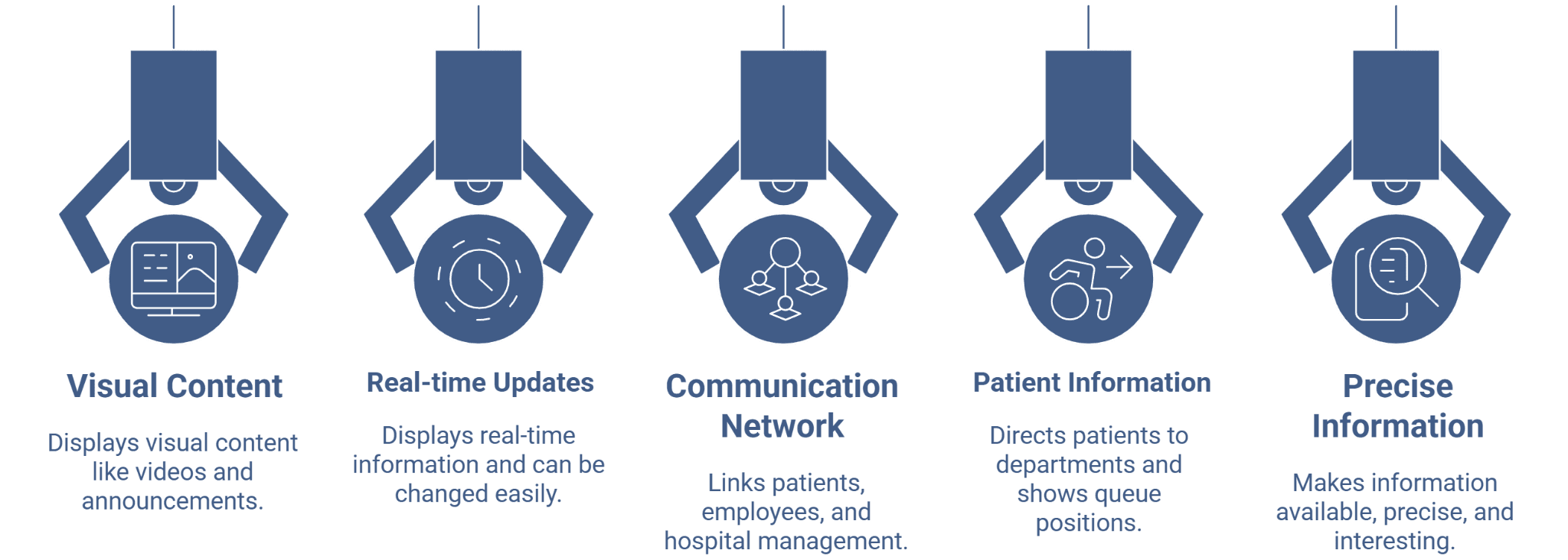
La señalización digital hospitalaria consiste en usar pantallas electrónicas - paneles LED, monitores LCD o quioscos interactivos - para mostrar contenido visual en un entorno sanitario. A diferencia de la señalización estática, estas pantallas funcionan en tiempo real y pueden modificarse para mostrar cualquier tipo de contenido: videos, comunicados, información al paciente, indicaciones y alertas de emergencia.
Un sistema de señalización eficaz en un centro médico no va solo de presentar contenido: es también una red de comunicación fluida que conecta a pacientes, personal y dirección del hospital. Ya se trate de dirigir a un paciente al departamento correcto o de mostrar su posición en la fila, la señalización digital vuelve la información accesible, precisa y atractiva.
La creciente necesidad de señalización digital sanitaria
Los hospitales son lugares complejos, con varios departamentos funcionando a la vez y miles de personas que pueden pasar por ellos cada día. Gestionar la comunicación en un entorno así puede ser todo un reto, y una comunicación equivocada genera confusión, retrasos e incluso estrés en los pacientes y sus familias.
La señalización digital sanitaria responde a esos retos centralizando la comunicación. En lugar de avisos verbales o notas impresas, el hospital puede usar pantallas digitales para transmitir información clara y coherente en todas partes. Esto resulta especialmente relevante en situaciones de tensión, como una urgencia, una consulta externa o un centro de diagnóstico.
Además, con el foco creciente en la experiencia del paciente, los hospitales buscan formas de hacer sus espacios más acogedores y menos intimidantes. La señalización digital ayuda en eso al ofrecer contenido informativo y tranquilizador, que reduce la ansiedad y mejora la satisfacción.
Usos principales del sistema de pantallas hospitalarias
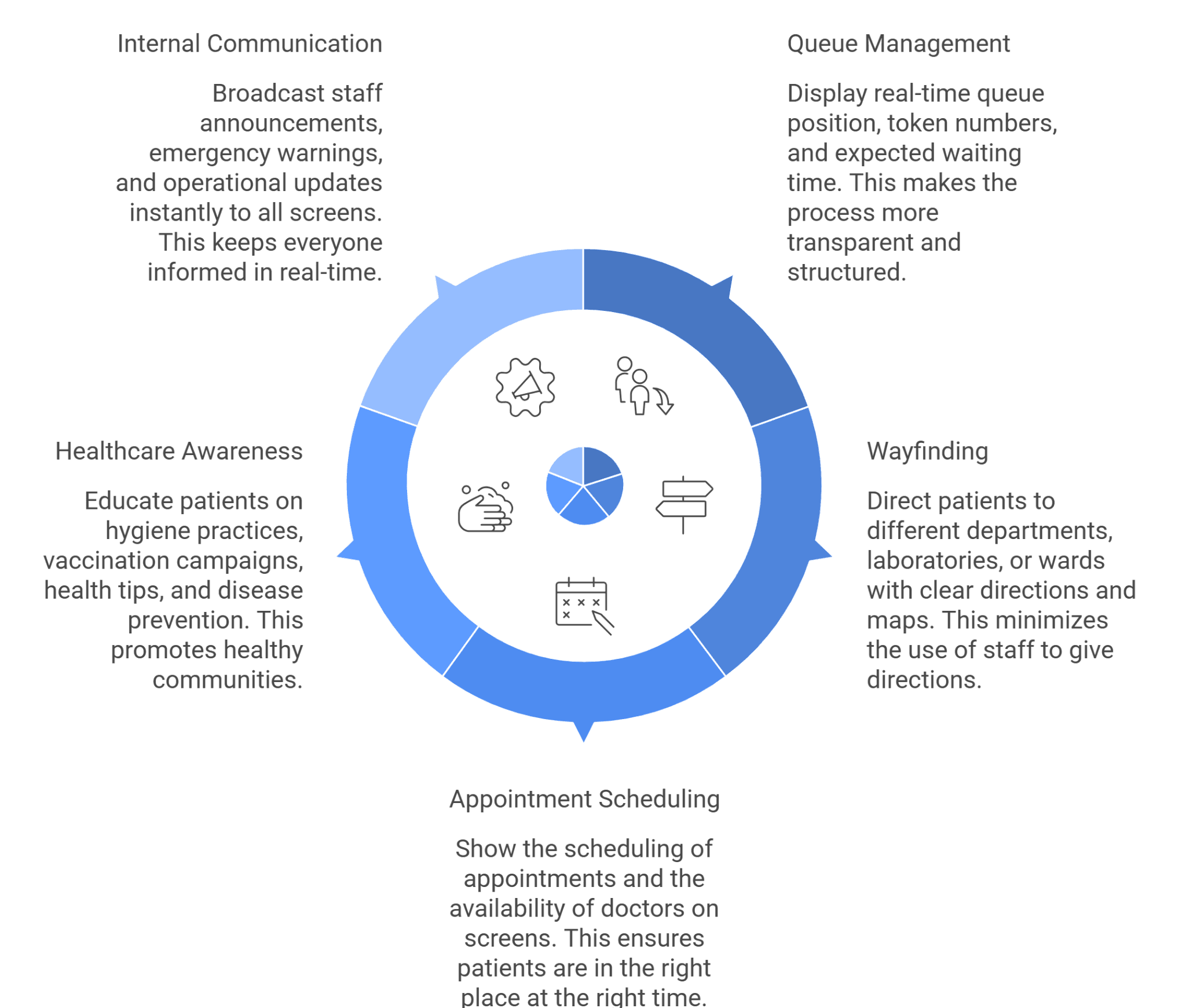
La gestión de filas es una de las aplicaciones principales del sistema de pantallas hospitalarias. Los pacientes se frustran con la espera y con no saber si van a ser atendidos. El sistema de señalización digital puede mostrar la posición en la fila en tiempo real, los números de turno y el tiempo estimado de espera, haciendo el proceso más transparente y ordenado.
La orientación es otra aplicación clave. Moverse por un hospital grande puede ser difícil, sobre todo para quien lo visita por primera vez. Las pantallas digitales pueden dirigir a los pacientes hacia distintos departamentos, laboratorios o plantas con indicaciones y mapas claros. Eso reduce la necesidad de que el personal dé indicaciones y disminuye la confusión.
También pueden mostrarse en pantalla la programación de citas y la disponibilidad de los médicos. Se trata de asegurar que los pacientes lleguen a los distintos departamentos, laboratorios o plantas con indicaciones y mapas claros. Eso reduce la necesidad de que el personal dé indicaciones y disminuye la confusión.
Otro caso de uso importante es la concienciación sanitaria. Los hospitales pueden usar la señalización digital para mostrar información educativa sobre hábitos de higiene, campañas de vacunación, consejos de salud y prevención de enfermedades. Eso no solo informa a los pacientes: también contribuye a comunidades más sanas.
Además, la señalización digital sirve para la comunicación interna. Es posible difundir comunicados al personal, alertas de emergencia y novedades operativas al instante en todas las pantallas, manteniendo a todo el mundo informado en tiempo real.
Ventajas de la señalización digital en hospitales
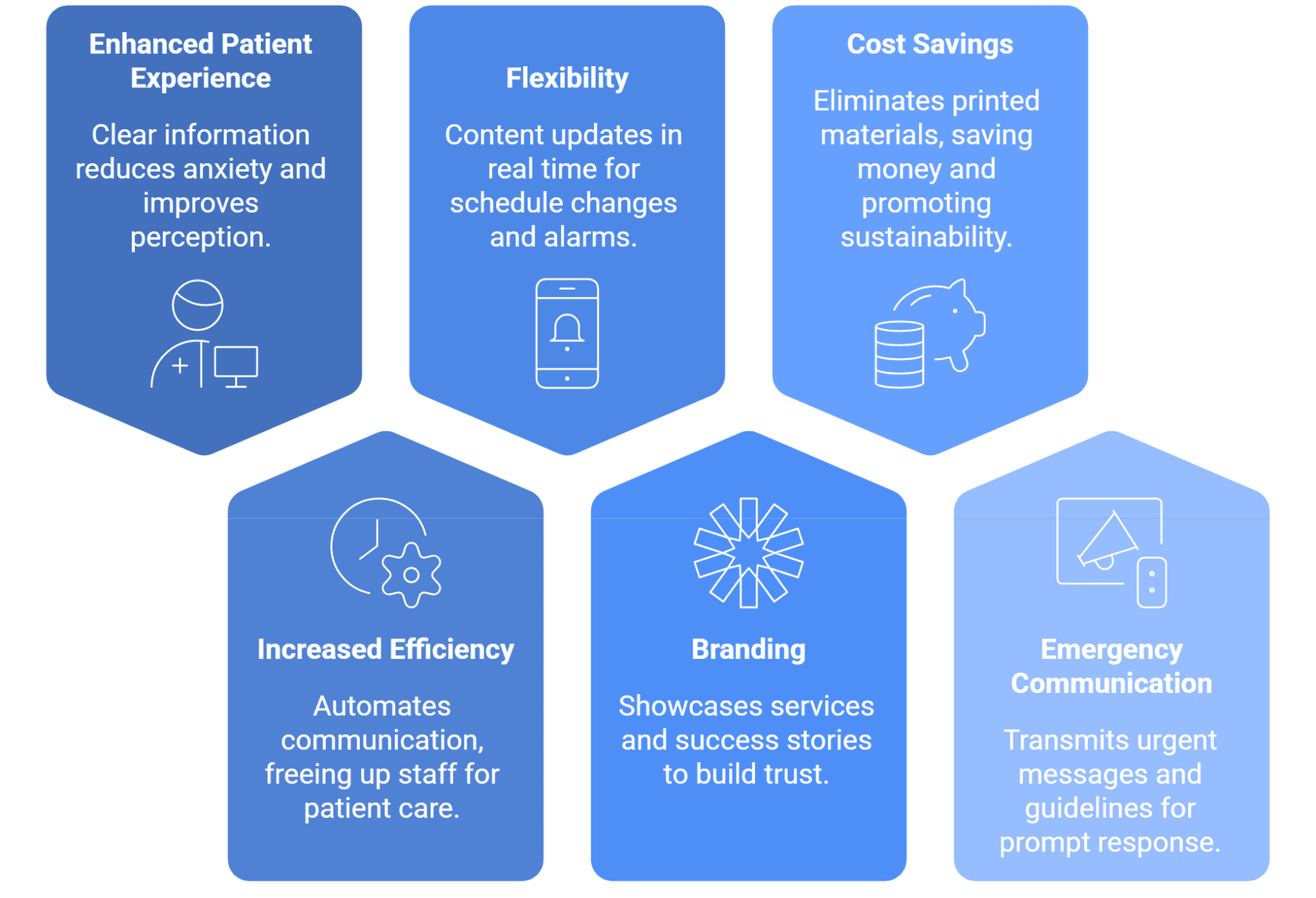
La comunicación no es la única ventaja de implantar señalización digital en un hospital. Una de las mayores es la mejora de la experiencia del paciente: cuando este dispone de información clara, su nivel de ansiedad baja y su percepción general del hospital mejora.
La señalización digital también aumenta la eficiencia operativa. Al automatizar la comunicación - actualizaciones de fila, comunicados -, el personal del hospital dedica más tiempo a atender a los pacientes y menos a tareas administrativas. El resultado es una mayor productividad y un mejor flujo de trabajo.
La flexibilidad es otra ventaja importante. El contenido de la señalización digital puede actualizarse en tiempo real desde un sistema central. Ya sea un cambio de horario de última hora o una alerta de emergencia, la información puede llegar a todas las pantallas en segundos.
La marca es otro terreno donde la señalización digital aporta valor. Los hospitales pueden usar las pantallas para mostrar sus servicios, sus logros y las historias de éxito de sus pacientes. Eso ayuda a generar confianza y refuerza la reputación del centro.
En cuanto al costo, la señalización digital elimina el uso de material impreso. A la larga, eso supone un ahorro considerable y contribuye además a la sostenibilidad ambiental.
Por otra parte, la señalización digital mejora la comunicación durante las emergencias. Los hospitales pueden usar estos sistemas para transmitir mensajes urgentes, pautas de evacuación o instrucciones de seguridad en situaciones críticas, lo que se traduce en una respuesta más rápida.
Qué buscar en un software de señalización digital sanitaria
El éxito de un sistema de señalización digital depende en gran medida de la elección del software, que es la base que gobierna el contenido, la programación y la gestión de los dispositivos.
Un buen software de señalización digital sanitaria debe contar con un sistema de gestión de contenido (CMS) fácil de usar, que permita al personal del hospital redactar, planificar y revisar contenido sin necesidad de conocimientos técnicos. Esa sencillez es especialmente crítica en centros sanitarios, donde el personal puede no tener tiempo para manejar sistemas complicados.
La gestión remota es otra función esencial. Los hospitales suelen tener varias pantallas repartidas entre departamentos o incluso entre distintas sedes. Un sistema centralizado que permita controlar todas las pantallas a distancia garantiza coherencia y eficiencia.
Las capacidades de integración también son importantes. El software debe poder integrarse con los sistemas de gestión hospitalaria, de programación de citas y de gestión de filas. Eso ayuda a mostrar datos en tiempo real y reduce la intervención manual.
La seguridad es una consideración crítica en el ámbito sanitario. El software debe ser capaz de proteger los datos sensibles de los pacientes y de permitir el acceso y el control del contenido únicamente al personal autorizado.
La escalabilidad es otro factor a tener en cuenta. A medida que un hospital crece, sus necesidades de señalización digital pueden ampliarse. El software debería poder asumir pantallas y funciones adicionales sin exigir una renovación completa.
Mejores opciones de software para señalización digital hospitalaria
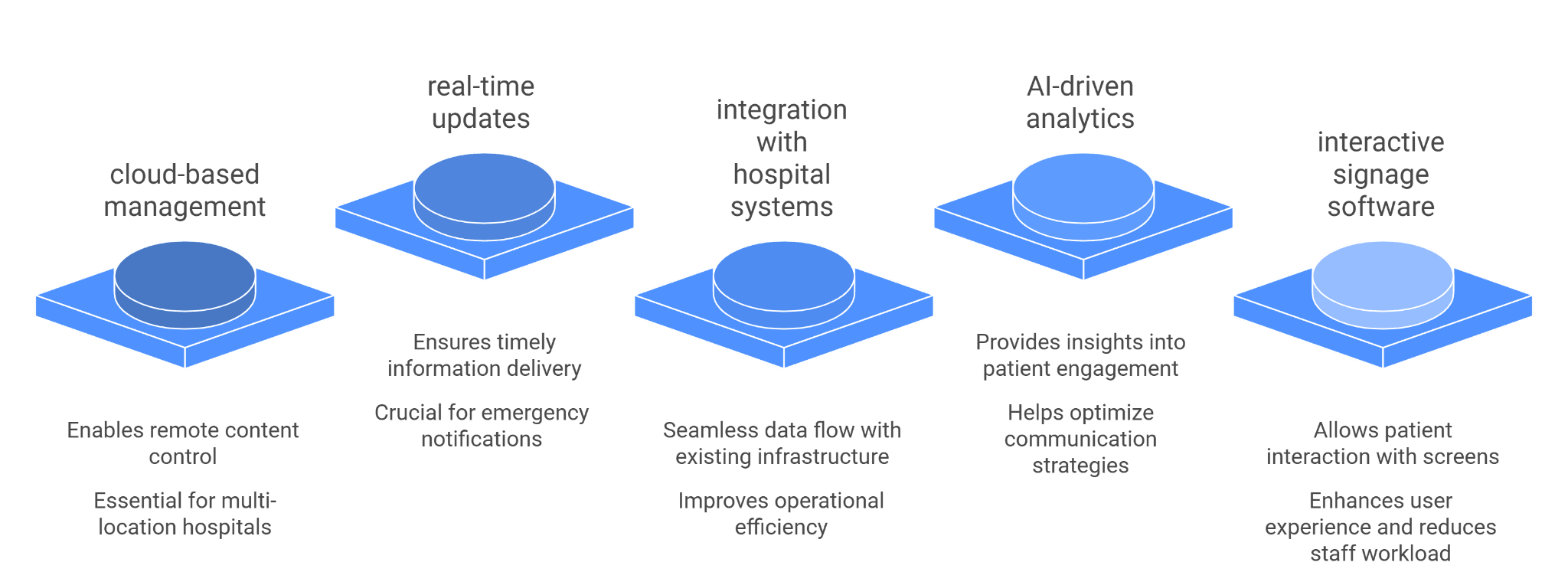
El mercado ofrece una variedad de soluciones de software pensadas específicamente para entornos sanitarios. Estos sistemas incorporan funciones innovadoras como la gestión en la nube, las actualizaciones en tiempo real y la integración con los sistemas hospitalarios existentes.
El software de señalización digital basado en la nube resulta especialmente beneficioso, porque permite a los hospitales controlar el contenido de forma remota. Eso puede ser de gran ayuda para proveedores sanitarios con varias sedes que necesitan garantizar uniformidad en todos sus centros.
Algunas soluciones ofrecen además analítica impulsada por IA, capaz de aportar información sobre la interacción de los pacientes y la eficacia del contenido. Eso ayuda a los hospitales a optimizar sus estrategias de comunicación.
Otra tendencia reciente es el software de señalización interactiva. Estos sistemas permiten a los pacientes acercarse a las pantallas y consultar información, pedir cita o moverse por el hospital. Mejora la experiencia de usuario y reduce la carga de trabajo del personal.
Al elegir el software, los hospitales deberían considerar sus necesidades concretas, su presupuesto y sus requisitos de escalabilidad. Una plataforma bien elegida puede mejorar mucho la eficacia de su sistema de señalización digital.
El futuro de la señalización digital en la sanidad
La señalización en centros médicos está directamente ligada a los avances tecnológicos. A medida que progresan la inteligencia artificial, el IoT y la analítica de datos, los sistemas de señalización digital se vuelven más inteligentes y personalizados.
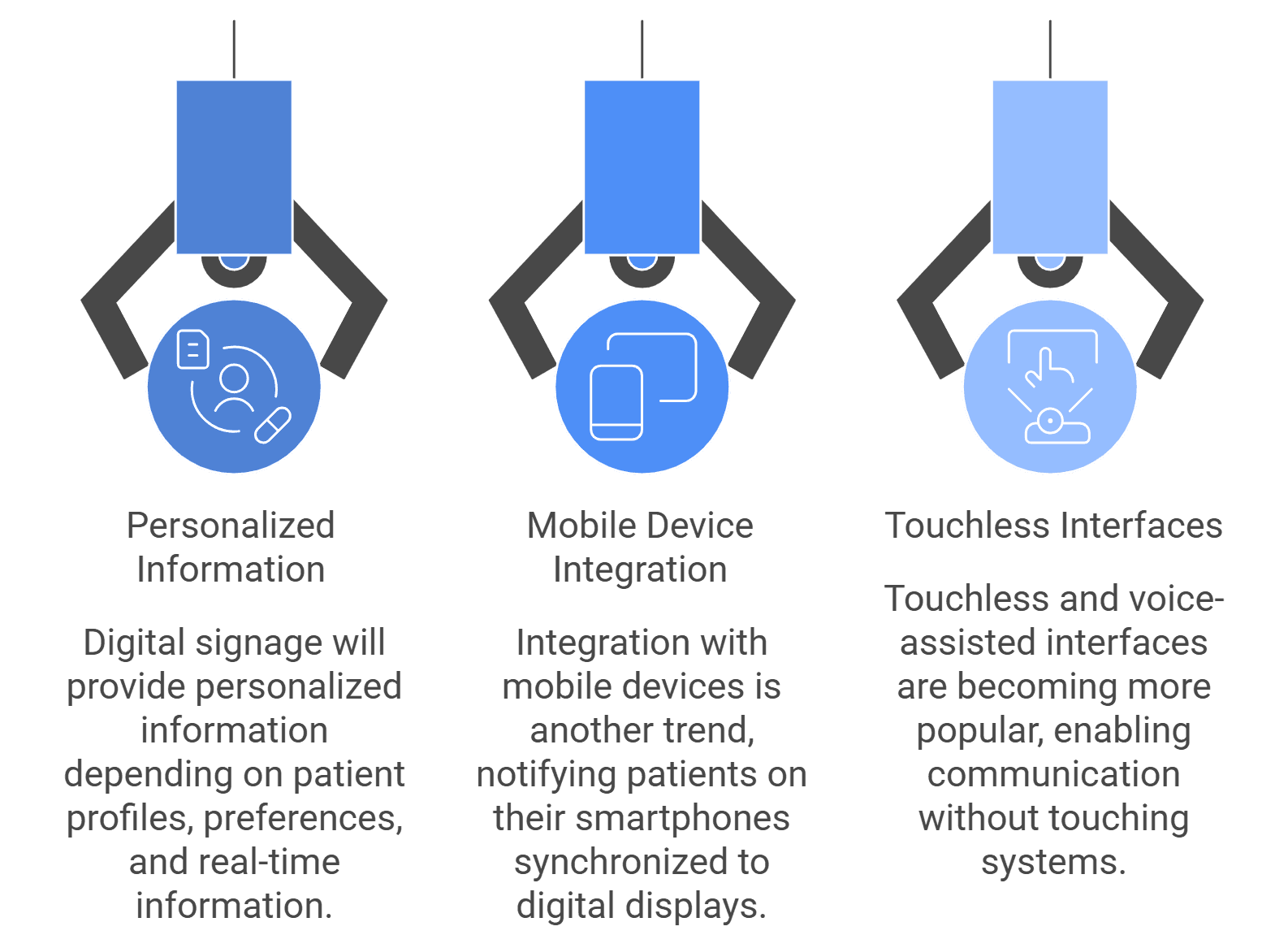
En los próximos años, la señalización digital ofrecerá información personalizada en función del perfil del paciente, sus preferencias y los datos en tiempo real. Por ejemplo, las salas de espera podrían mostrar información sanitaria adecuada según la consulta o el departamento.
La integración con dispositivos móviles es otra tendencia. El paciente puede recibir avisos en su teléfono, sincronizados con las pantallas digitales, para lograr un proceso de comunicación continuo.
Las interfaces sin contacto y asistidas por voz también ganan popularidad, sobre todo tras el mayor foco en la higiene y la seguridad. Estas tecnologías permiten al usuario interactuar con los sistemas sin tocarlos.
Conclusión
La señalización digital hospitalaria ya no es un lujo: es una necesidad en un entorno sanitario. Desde mejorar la experiencia del paciente hasta elevar la eficiencia operativa, las ventajas de implantar un buen sistema de pantallas hospitalarias son notables.
Al adoptar la señalización digital sanitaria, los hospitales pueden agilizar la comunicación, reducir la confusión y crear un entorno más organizado y amable para el paciente. Ya se trate de gestionar filas, orientar a los visitantes o difundir información crítica, la señalización digital cumple un papel vital para que todo funcione con fluidez.
La clave para obtener esas ventajas está en elegir el software adecuado. Una solución accesible, segura y escalable puede transformar la forma en que un hospital se comunica y trabaja.
A medida que la tecnología siga evolucionando, la señalización digital será aún más potente y permitirá a los hospitales ofrecer experiencias sanitarias más inteligentes, personalizadas y eficientes. Un buen sistema de señalización para centros médicos es una inversión que deja al proveedor sanitario preparado para los retos y las oportunidades del mañana.