Digital Signage Software Pricing in 2026: A Complete Guide
A 2026 guide to digital signage software pricing, with real per-screen prices from five providers and tips to pick the most cost-effective plan.
How Much Does Digital Signage Software Cost in 2026?
If you are planning to add digital signage to your business in 2026, one of the first questions is simple: how much does the software cost?
You are not alone. Most business owners, retailers, restaurants, offices and marketers start here. This guide breaks it down step by step, with real prices from five providers.
Pricing Starts with Your Use Case and Scale
Digital signage hardware comes in many forms: LED walls, commercial displays, video walls and high-brightness screens. The software is the brain behind them. It runs your use case, sends content to every screen and keeps the whole network organized.
Step 1: Define Your Use Case
Ask yourself:
- Do you want to earn money from your screens, through DOOH advertising or interactive kiosks that take payments?
- Or do you want to run your business better, for example by updating digital menu boards in restaurants, running promotions in retail stores, or sharing news and notices in offices?
Your answer decides which features you need, and features drive the price.
Step 2: Count Your Screens
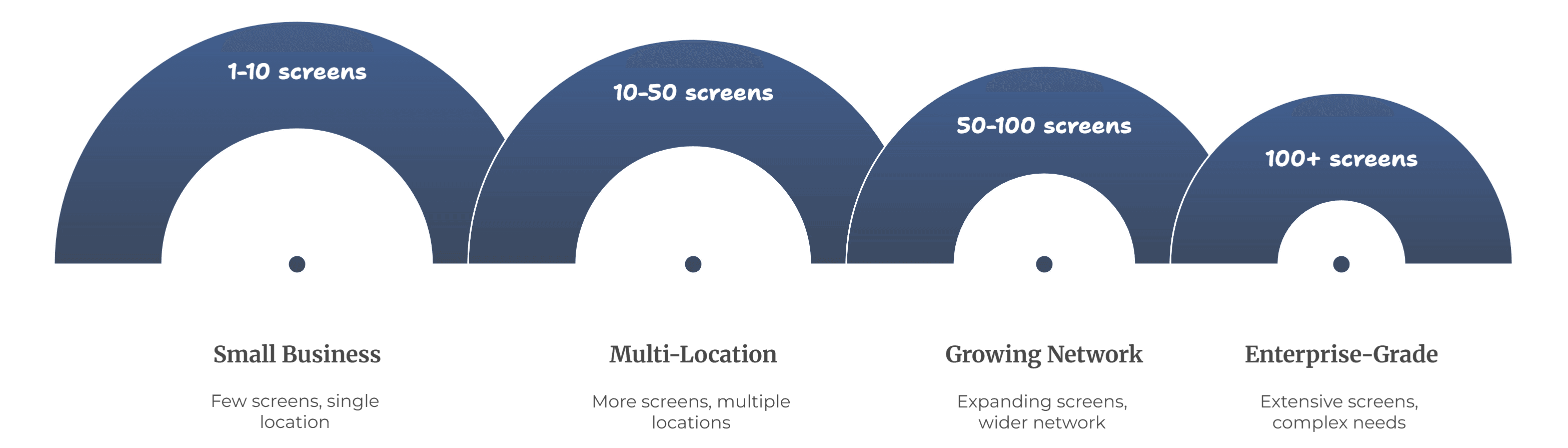
The number of screens matters:
- 1 to 10 screens: a small business or a single location
- 11 to 50 screens: a business with several locations
- 51 to 100 screens: a growing screen network
- More than 100 screens: an enterprise network with more complex needs
The bigger the network, the more room there is to negotiate volume pricing.
How Is Digital Signage Software Pricing Calculated?
Most providers charge a license fee for each screen, billed monthly or yearly. Some sell bundles with a screen limit. The model depends on how the software is deployed:
1. On-Premise (Self-Hosted) Digital Signage Software
- You pay once for the license, plus optional support or upgrade fees.
- Popular with banks, hospitals, healthcare groups and offices that keep their data on their own servers.
- Costs usually include a one-time server license, which can manage 100+ screens.
- You also pay a license fee for each screen connected to the server.
Example: a healthcare provider running 13 lobby screens buys one server license and 13 screen licenses.
2. Cloud-Based Digital Signage Software
- Billed monthly or yearly.
- Quick to set up and easy to scale.
- Common in retail, restaurants and franchise businesses.
- The cost grows in step with your screen count.
Average Digital Signage Software Pricing in 2026
Entry plans from the five providers below cost $8 to $20 per screen per month. Plans with more features cost more, up to $34.99 per screen per month for OnSign TV's Enterprise plan. Wilyer Pro costs $15 per screen per month, or $145 per screen per year on yearly billing, which works out to about $12 a month. For 50 or more screens, most providers move to custom project pricing.
Here is how their entry plans compare. Prices are in USD per screen, as listed on each provider's pricing page on 9 October 2026:
| Product | Monthly price | Yearly cost | Free trial | Hardware included | Best for | Key highlight |
|---|---|---|---|---|---|---|
| Wilyer | $15 | $145, billed yearly | 14 days | No, works with your own screens | SMBs and enterprises | Cloud and on-premise options |
| OnSign TV | $19.99, or $17.99 billed yearly | $215.88, billed yearly | Yes | Not listed | SMBs | Simple setup |
| Yodeck | $8 | $96, billed yearly | Free plan for 1 screen | Free player on paid plans | SMBs and startups | Low entry price |
| ScreenCloud | $20, billed yearly | $240, billed yearly | 14 days | Free device on yearly plans | Corporates | Strong app integrations |
| NoviSign | $14, billed yearly | $168, billed yearly | 30 days | Not listed | Healthcare and corporate | Rich feature set |
Is $10 to $20 Per Screen Per Month Expensive?
Not usually. Here is why:
- For a small network of 1 to 10 screens, $8 to $20 per screen per month is the normal range for cloud software.
- For a large network of 1,000+ screens, you can usually negotiate custom enterprise pricing.
Other Factors That Affect Pricing
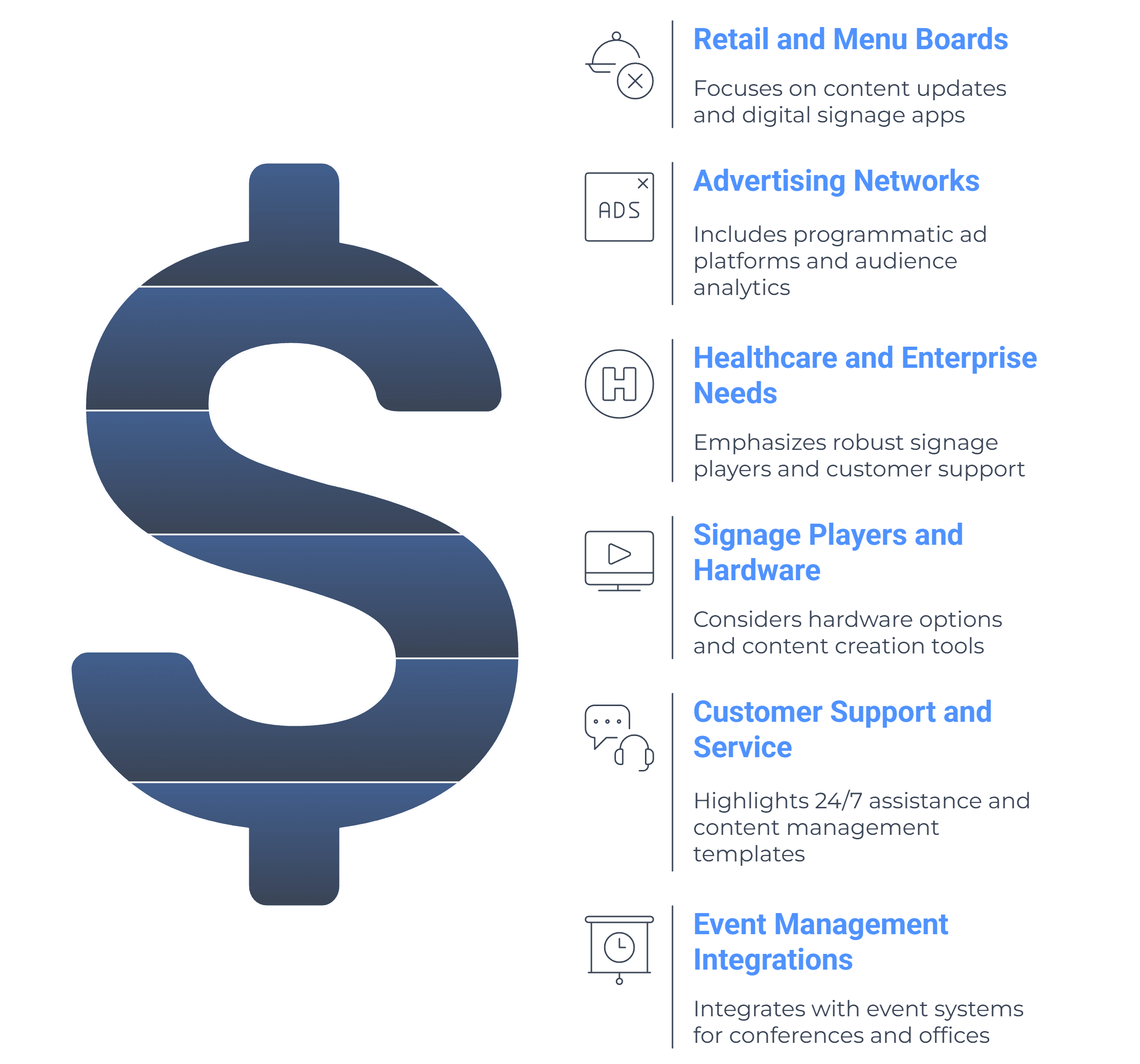
Retail Businesses and Digital Menu Boards
For retail chains and restaurants, the most common job is updating promotions and menus. Good digital signage apps and content management tools push an update to every screen in seconds.
Advertising Networks
If your business runs on DOOH advertising, pricing may also cover integrations with programmatic ad platforms and real-time audience analytics.
Healthcare, Offices, and Enterprise Needs
Hospitals, healthcare providers and offices need reliable signage players and strong customer support. Enterprise deployments often add integrations with other apps, scheduling systems and advanced content management tools.
Signage Players and Hardware
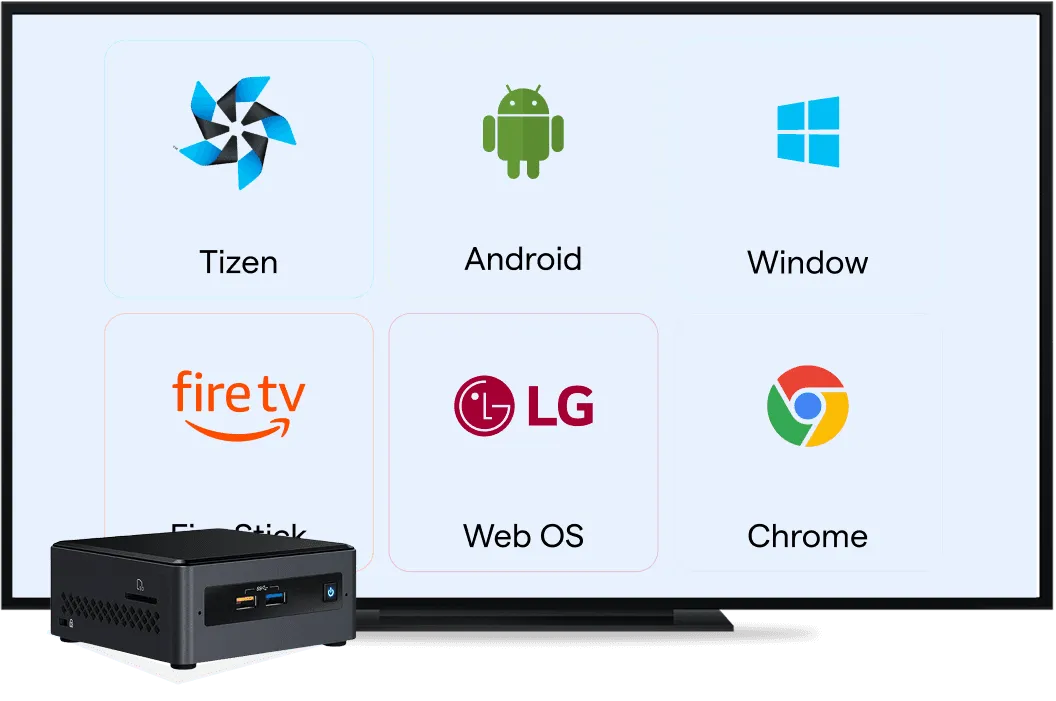
Software pricing can depend on the signage player or hardware, such as an Android box, a Raspberry Pi, an LG webOS display or a standard smart TV. Some platforms also include free templates and design tools to make content creation easier.
Customer Support and Service
Beyond the license, check what support you get. Good providers offer quick help, demo sessions, case studies and templates so your team can manage content without delays.
Event Management Integrations
Some advanced platforms connect with event management systems, which makes them useful for conferences, trade shows and corporate offices.
Cost Examples by Network Size
- A single store with 5 screens: $75 a month on Wilyer Pro, or $725 a year on yearly billing.
- A 10-outlet restaurant brand with 2 menu boards per outlet (20 screens): $300 a month, or $2,900 a year on yearly billing.
- A 50-screen retail chain: $750 a month, or $7,250 a year on yearly billing. At this size most providers, Wilyer included, also offer custom pricing.
- A hospital with 13 lobby screens on an on-premise system: a one-time license plus support fees, quoted per project.
- An advertising network with 2,000+ screens: a custom quote that includes ad platform integration.
See how real customers use Wilyer:
- See how Hindware uses Wilyer
- See how Taco Bell uses Wilyer
- See how Six2O uses Wilyer
- See how a power plant uses Wilyer
Frequently Asked Questions (FAQs) about Digital Signage Software Pricing
How much does digital signage software cost per screen?
Cloud digital signage software usually costs $8 to $20 per screen per month on an entry plan, based on the published prices of the five providers above, and plans with more features go up to about $35. Wilyer's Pro plan costs $15 per screen per month. For a small business with 10 screens, that means about $80 to $200 a month on an entry plan, or $150 a month on Wilyer Pro ($1,450 a year on yearly billing). On-premise software works differently: it is usually a one-time license for the server and each screen, plus support, quoted per project. Large networks can usually negotiate custom enterprise pricing.
Can I use digital signage software for restaurants or cafes?
Yes. Restaurants and cafes use it for menu boards, promotions and video walls. It is one of the most common uses.
Do I need extra hardware to run digital signage?
Usually you need a media player, a smart TV or a connected screen. Some platforms sell plug-and-play players, while others, like Wilyer, run on the screens and players you already own.
Is digital signage only for big companies?
Not at all. Small businesses, event companies and retail outlets use digital signage too. The cost grows with the number of screens, so you can start small and add screens later.
What is the difference between free and paid digital signage software?
Free software usually limits the number of screens, content management features or support. Paid plans add scheduling, analytics and priority support. Yodeck, for example, offers a free plan for one screen.
Can I manage digital screens remotely?
Yes. Most modern platforms let you update content, set schedules and check screen status from one dashboard, which makes it easy to run screens across many locations.
What is digital signage software and what does it do?
Digital signage software is a tool that shows and controls content such as images, videos and ads on digital screens or TVs. It lets you upload, schedule and display that content, and decide what plays, when it plays and on which screen. Businesses use it to show ads, menus, announcements and updates in offices, restaurants, stores and at events.
How do you develop digital signage software?
You need three parts: a content management system (CMS) to upload and schedule media, a player app that runs on the TV or screen, and a server or cloud backend that keeps content in sync. Most businesses buy a ready-made platform instead, because building and maintaining all three takes a dedicated team.
What is the price of digital signage software in India?
Prices vary by provider. Wilyer's Pro plan costs ₹1,200 per screen per month, or ₹12,000 per screen per year on yearly billing, and you can try it free for 14 days.
What software is used for digital signage?
Popular digital signage software includes Wilyer, Yodeck, ScreenCloud, NoviSign, OnSign TV and Scala. Businesses choose based on budget, features and ease of use.
Build vs. Buy: Open Source or Paid Digital Signage Software?
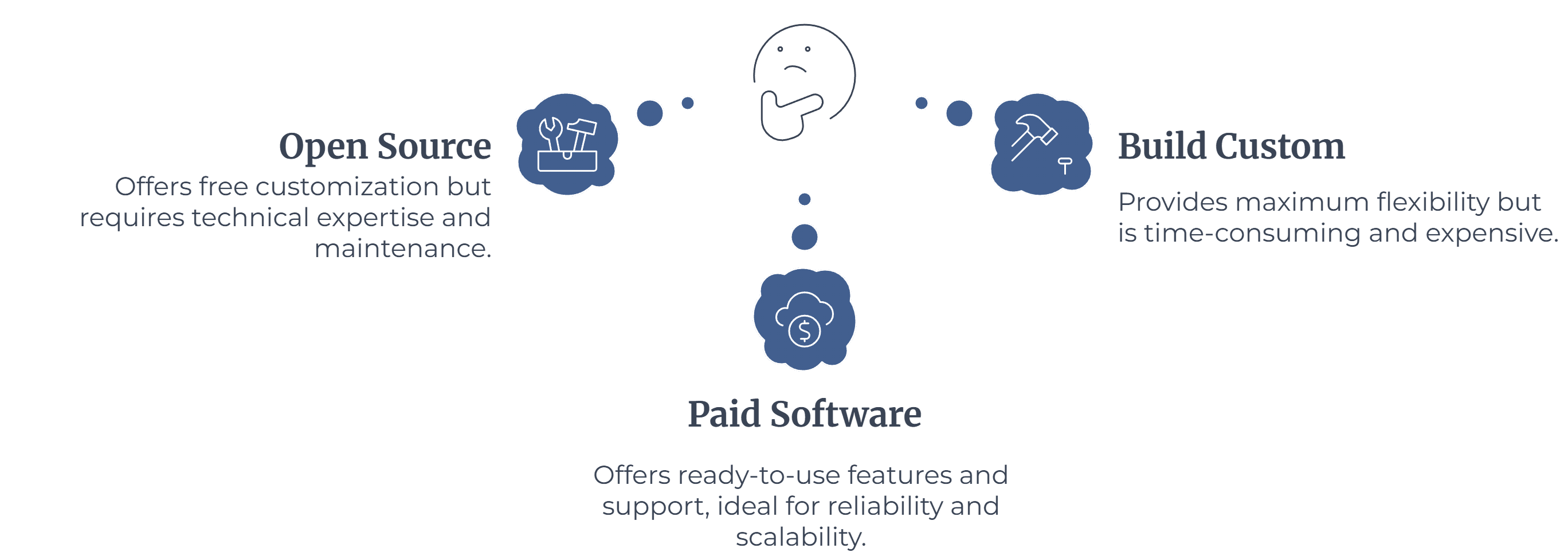
When you plan your digital signage, one big decision is whether to build your own system, use open-source tools or pay for software. Open-source options like Anthias (formerly Screenly OSE), Xibo and Concerto are free and customizable, but they need technical skills, server management and ongoing maintenance. Building your own system gives you full control, but it takes time and gets expensive over the years. Paid platforms give you ready-to-use features, cloud hosting, updates and support, which suits businesses that want a reliable network without a large IT team. The right choice depends on your budget, your team's skills and your growth plans.
Final Thoughts
Digital signage software pricing in 2026 depends on your goals, your use case and your scale. A small business can start for a few hundred dollars a year, while an enterprise network may run into tens of thousands, with better returns at that scale.
When you compare options, look past the sticker price to the value you get: smoother operations, better audience engagement, advertising revenue and reliable support. Ask for a demo, try the free templates and read case studies before you decide.
Find the plan that fits your needs.