Restaurant
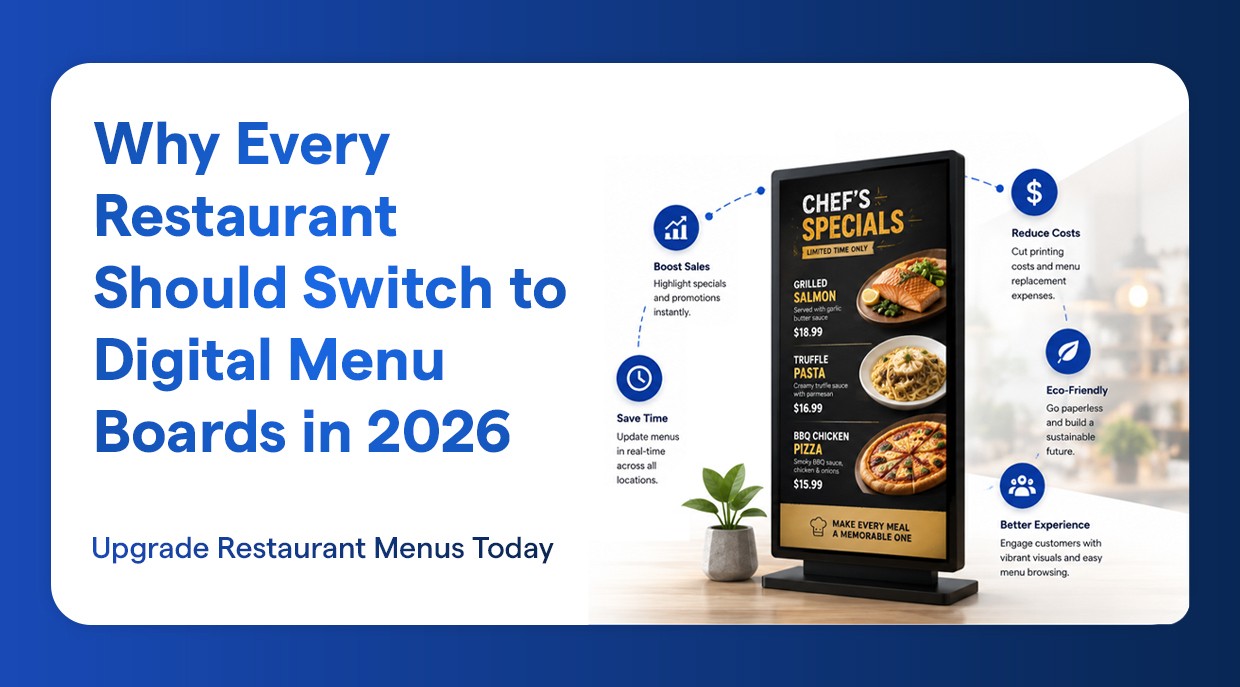
Why Every Restaurant Should Switch to Digital Menu Boards in 2026
Discover why restaurants are switching to digital menu boards for easier updates, better customer experience, and higher sales.
8 Min Read
Ayush Bindal
Introduction
The restaurant industry is evolving faster than ever. In 2026, customer expectations are no longer limited to delicious food and fast service. Diners now expect convenience, personalization, speed, and visually engaging experiences the moment they enter a restaurant.
Printed menus are quickly becoming a thing of the past. From here, it’s clear that restaurants everywhere are changing their standardized menus for dynamic digital menu boards that enhance customer experience, boost business productivity, and boost profits.
From real-time updates to AI-powered promotions, digital menu technology is reshaping the future of dining. Restaurants that embrace this transformation gain a competitive edge, while those relying solely on printed menus risk falling behind.
What is a Digital Menu Board?
A digital menu board is an electronic sign displayed in restaurants to dynamically display menus, promotions, pricing, videos, and branded content.
A digital board can be updated on-the-spot via cloud-based software, which is not possible with traditional printed menus. Based on time and customer demand, restaurants can automatically have breakfast, lunch, dinner, seasonal offers, combo meals, or limited-time promotions displayed.
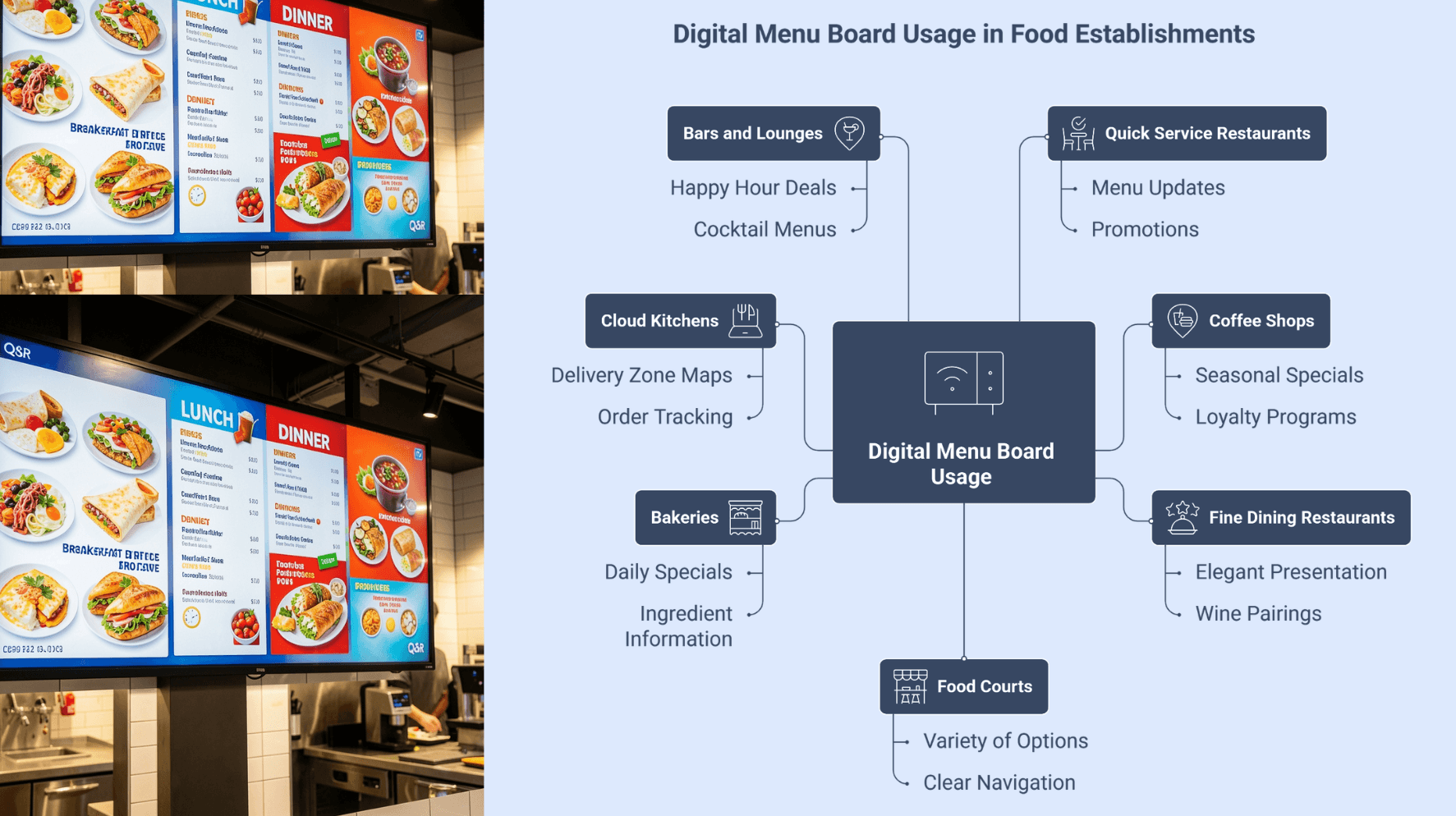
A digital menu board is typically used in:
Quick Service Restaurants (QSRs)
Digital menu boards are a great solution for QSRs to accelerate order times, encourage customers to order combo meals, enhance customer satisfaction, and to manage high-volume operations more efficiently during peak business hours.
Coffee Shops
Digital displays at coffee shops display beverages, bakery products, seasonal beverages, and special promotions, helping to build a modern and visually appealing customer space.
Fine Dining Restaurants
Digital menu boards can showcase high-quality food, wine, chef specials, and gorgeous branding in fine dining establishments, thereby increasing the overall dining experience.
Food Courts
Food courts use digital menu boards to attract customers quickly, display multiple menu categories clearly, and improve visibility in crowded and competitive environments.
Bakeries
Digital signage is used at bakeries to display fresh products, cakes and pastries, combo deals, and daily specials with eye-catching images that inspire impulse buying.
Cloud Kitchens
Cloud kitchens use digital menu systems to manage online ordering menus, update availability instantly, and streamline operations across multiple food delivery platforms efficiently.
Bars and Lounges
Digital boards are used in bars and lounges to visually announce cocktails, happy hour specials, entertainment, and anyone who has something special to offer with their cocktails.
Why Switch Digital Menu Board Systems in 2026?
By 2026, the restaurant industry will have evolved into a highly automated, personalized, and visually driven ecosystem focused on delivering seamless customer experiences and operational efficiency.
Digital menu boards are able to address many challenges that printed menus cannot.
These are the main reasons that restaurants are shifting to them.
Real-Time Menu Update
The ability to change menus at a moment’s notice is one of the greatest benefits of digital menu boards.
Restaurants frequently change:
Prices
Combo offers
Seasonal dishes
Sold-out items
Happy hour promotions
Printed menus would involve high costs in redesign and reprinting for any changes. Digital systems enable real-time updates on all screens from a central screen.
Better Customer Experience
Today’s dinner wants an attractive, informative menu.
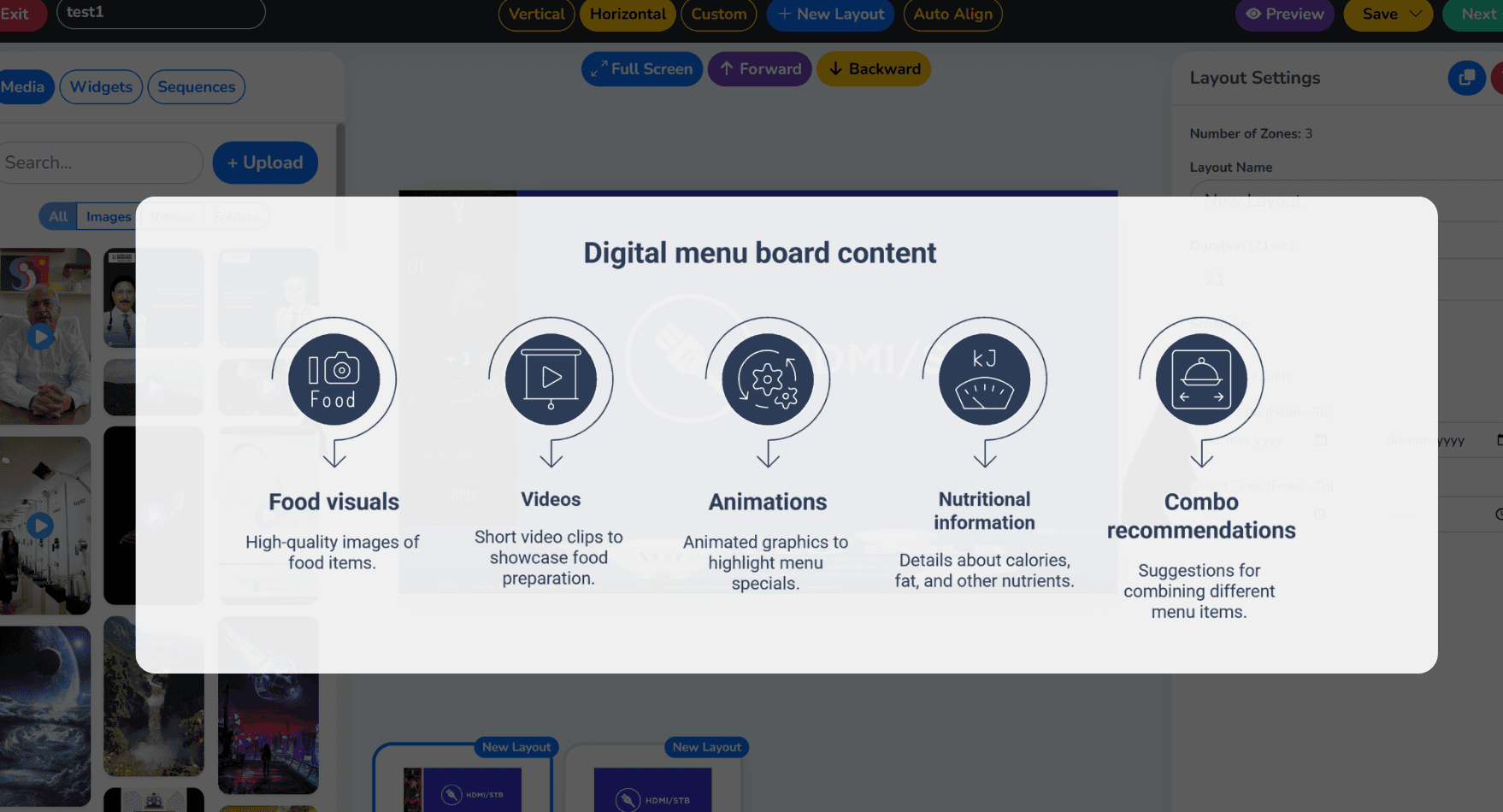
Digital menu boards are used to display:
High Quality Food Visuals
Digital menu boards display high-resolution images of food that help restaurants capture customer attention and to make the food appear more appealing and mouth-watering, allowing for faster decision-making.
Videos
Digital video displays with videos on the menu boards at restaurants provide a more dynamic and immersive customer experience, which allows them to highlight their food production, feature signature recipes, promotions, and brand messaging.
Animation
Animated content helps digital menus appear more dynamic and eye-catching, improving menu visibility while effectively promoting special offers, combo meals, and limited-time restaurant promotions.
Nutrition Information
Digital menu boards can provide calorie counts and nutrition information, and ingredients very clearly, which can help educate customers and enhance menu transparency.
Combo Recommendations
Restaurants use digital menu boards to recommend combo meals and add-ons strategically, encouraging upselling opportunities while helping customers discover better-value options quickly and easily.
It increases customer involvement and makes the decision easier. Research reveals that a pretty menu has a significant impact on buying decisions.
Higher sales and Upselling
Digital menu boards are like virtual salespeople.
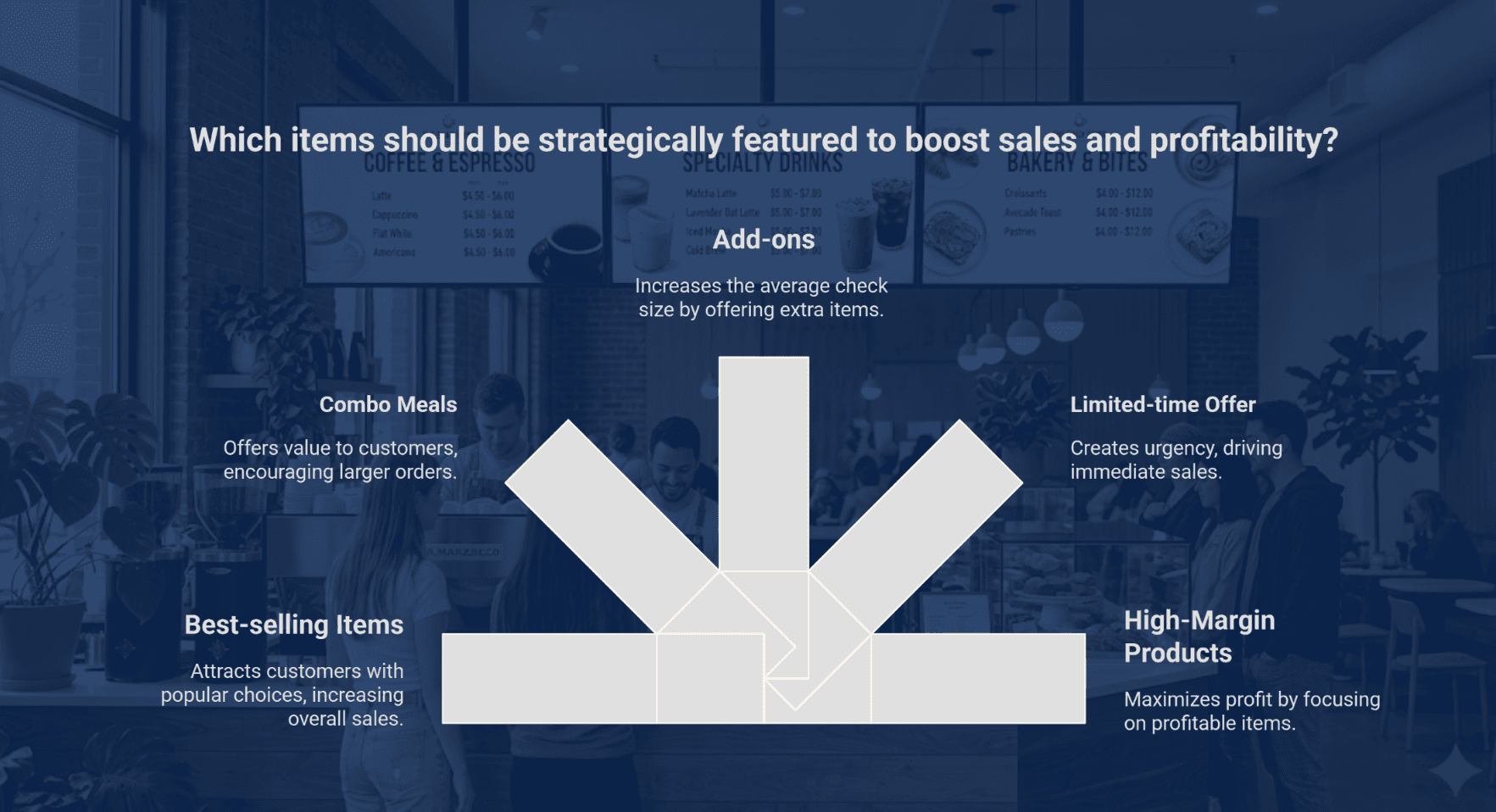
Restaurants can strategically feature:
Best-Selling Items
Digital menu boards can display some of the top-selling items in the restaurant menu in a prominent manner, which will catch the eyes of the customers and boost the sales of popular food and in-demand foods.
Combo Meals
As consumers can visually see attractive and appealing food and pricing combinations on a digital menu board, they’re more likely to order a combo meal to get a better deal, which boosts a restaurant’s profit as well.
Add-Ons
Digital menus offer a great way to promote upsells, such as extra toppings, dessert, drinks, or fries, at restaurants to help maximize the value of every customer order.
Limited-Time Offers
Digital menu boards can help restaurants to promote their limited-time offers as soon as they go live, which means that customers are more likely to grab the opportunity and make a purchase, while also making their promotions more effective.
High-Margin Products
High-margin menu items can be strategically placed in the restaurants' digital displays to boost profitability, highlight premium menu items, and push customers to select more profitable menus.
Research suggests digital menu boards can increase upselling opportunities and average order value significantly.
Reduced Printing Costs
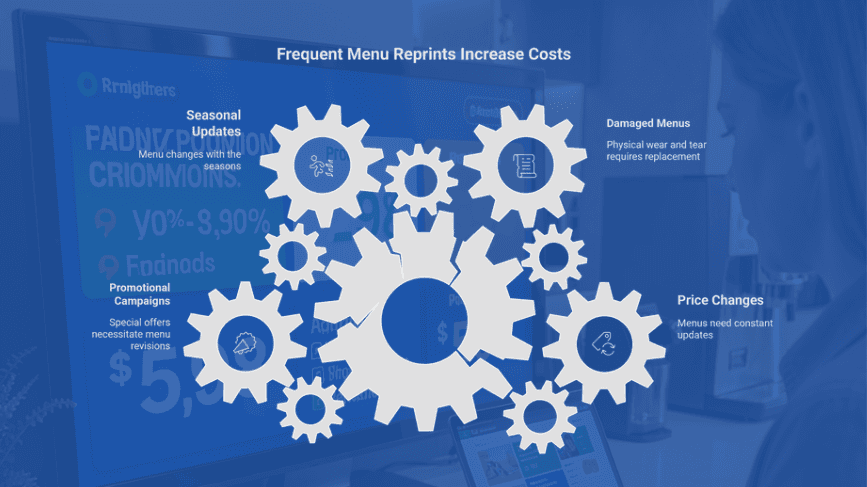
There’s a need to reprint printed menus regularly because of:
Price Changes
Accurate pricing without the need to reprint traditional menus is easily accomplished from a single point of view for a restaurant to update food prices on all digital screens.
Combo Offers
Digital systems can dynamically promote combo meals: Restaurant operators can create, edit, or cancel special meal deals on the fly based on sales.
Seasonal Dishes
Digital displays can be used to quickly promote seasonal menus and festive specials, which can help draw the attention of customers and keep menus fresh and appealing.
Sold-Out Items
Digital menu boards allow restaurants to remove unavailable or sold-out items instantly, preventing customer disappointment and improving ordering accuracy during busy hours.
Digital menu boards eliminate recurring printing costs while providing unlimited updates.
Faster Ordering and Improved Efficiency
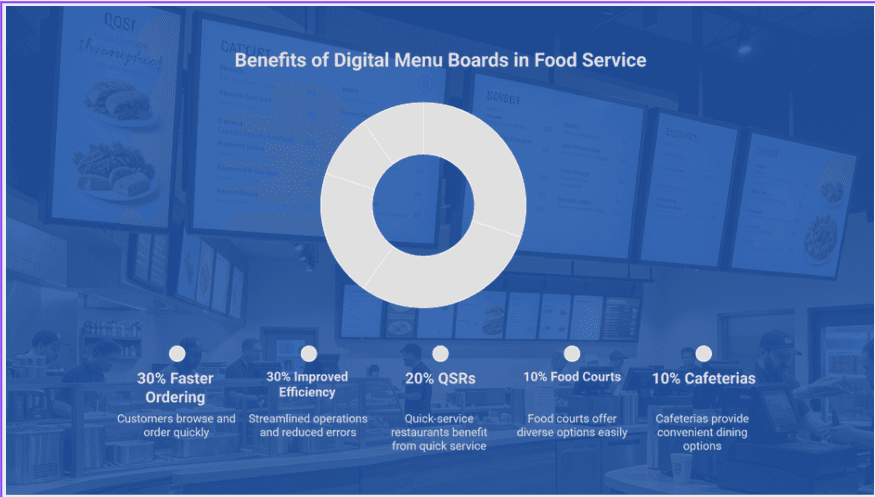
Digital Menu boards assist customers in quickly browsing menus and ordering.
This is especially beneficial for:
QSRs
Food courts
Cafeterias
Simplified digital layouts reduce confusion and improve throughput during peak hours.
Multi-Location Management
Restaurant chains can find it challenging to maintain a consistent brand, pricing, and menu accuracy for multiple locations. Printed menus tend to cause discrepancies and lag time between branches. A central digital signage system can help businesses ensure consistent brand messaging and provide a seamless customer experience across all locations.
Centralized Content Control
Digital signage platforms enable restaurant owners to edit, update, and control all restaurant menus, promotions, and branding content remotely. This eliminates errors, saves time, and allows for quick changes when it comes to seasonal offers or pricing updates. This means restaurant chains can optimize, have consistency, and simplify their operations in multiple locations.
AI and Smart Automation
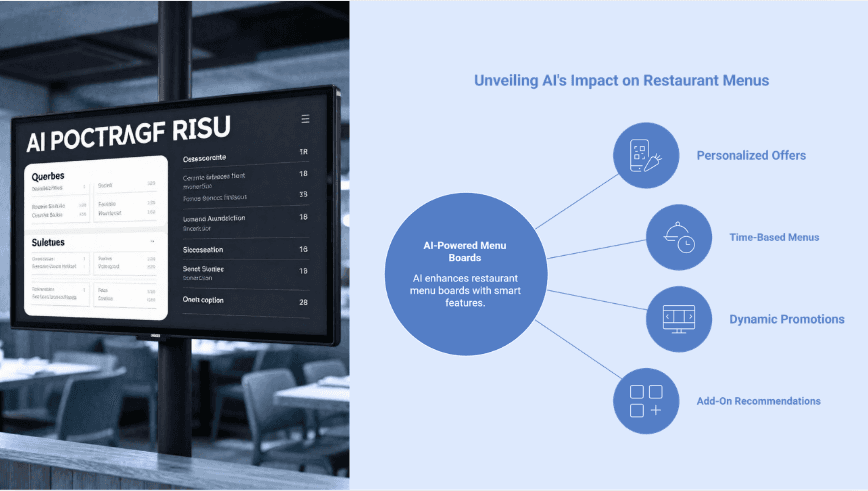
In 2026, AI-powered menu boards are becoming increasingly popular.
AI now helps restaurants to:
Suggest personalized offers
Display time-based menus
Adjust promotions dynamically
Recommend add-ons.
AI-enabled signage enhances the targeting of customers and increases customer conversion.
Printed vs Digital Menu
Feature | Printed Menu | Digital Menu Board |
Updates | Requires reprinting | Instant updates |
Cost Efficiency | High recurring costs | Long-term savings |
Visual Appeal | Static | Dynamic and engaging |
Promotions | Limited | Real-time campaigns |
Customer Engagement | Basic | Interactive experience |
Multi-location Control | Difficult | Centralized management |
Upselling Capability | Low | High |
Analytics | Not available | Performance tracking |
Digital Menu Advantages for Restaurants
Digital menu benefits are not just about looks. They enhance restaurant operations, branding, and profitability.
Major advantages include:
Real-time flexibility
Faster service
Enhanced branding
Better customer engagement
Smart analytics
Improved upselling
Reduced waste
Remote content management.
Digital signage for restaurants provides more control and improves communication with customers.
Restaurant Menu Board Benefit in 2026
Today, the benefits of restaurant menu boards are becoming indispensable for any food business.
Key benefits include:
Increased Revenue
Improved order accuracy
Better customer retention
Dynamic marketing opportunities
Reduced operational costs
Modernized dining experience
Faster campaign execution
Enhanced brand perception
Digital menu boards are no longer just display screens - they are business growth tools.
Future Trends in Restaurant Digital Menu Boards
The future of restaurant technology is centered around intelligent automation and immersive customer experiences.
The trend that will dominate 2026:
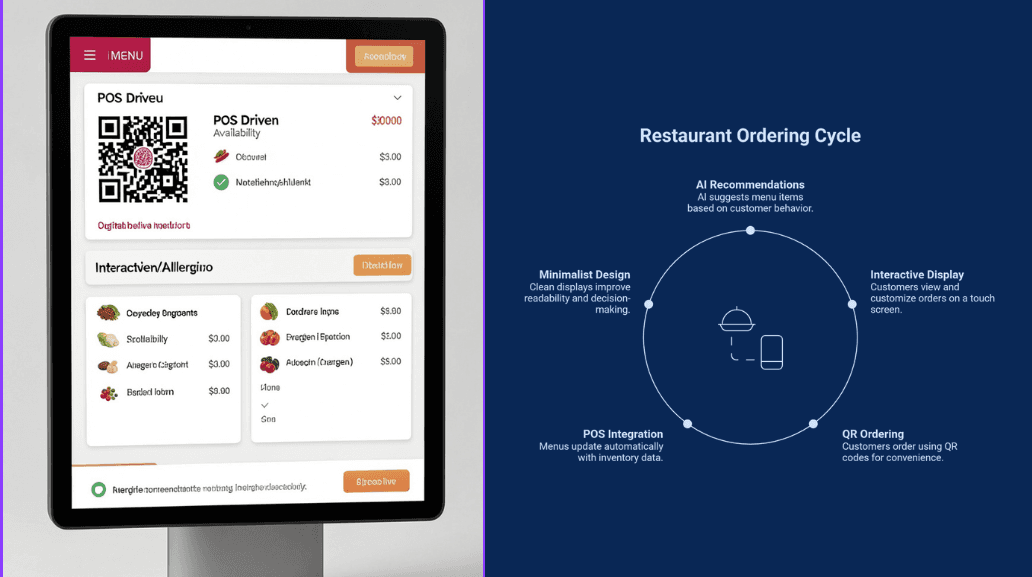
AI-Powered Recommendations
Customer behaviour and time of day dictate automatic menu suggestions for combos and add-ons.
Interactive Touch Display
Ingredients, calories, allergens, and customization options can be viewed and interacted with via a customer-friendly interface.
QR Code Integration
QR ordering and digital menu boards work hand-in-hand at restaurants for seamless ordering.
POS Integration
The menus are updated automatically according to the inventory and POS data.
Minimalist Menu Design
Modern restaurants are adopting clean and clutter-free displays to improve readability and customer decision-making.
AI-Powered Recommendations
Customer behaviour and time of day dictate automatic menu suggestions for combos and add-ons.
Interactive Touch Display
Ingredients, calories, allergens, and customization options can be viewed and interacted with via a customer-friendly interface.
QR Code Integration
QR ordering and digital menu boards work hand-in-hand at restaurants for seamless ordering.
POS Integration
The menus are updated automatically according to the inventory and POS data.
Minimalist Menu Design
Modern restaurants are adopting clean and clutter-free displays to improve readability and customer decision-making.
Challenges of Printed Menus in Modern Restaurants
Printed menus create several operational limitations:
Expensive updates
Slow promotional execution
Outdated branding
Difficult multi-location management
Lack of customer engagement
No analytics or tracking
In contrast, digital menu systems offer flexibility, automation, and scalability.
How Wilyer Helps Restaurants with Digital Menu Boards
Wilyer Digital Signage Solutions helps restaurants modernize customer communication through cutting-edge digital signage solutions for restaurants, cafes, and food service businesses.
Wilyer offers a strong tool to ease restaurant management and boost customer interaction.
Key Features of Wilyer
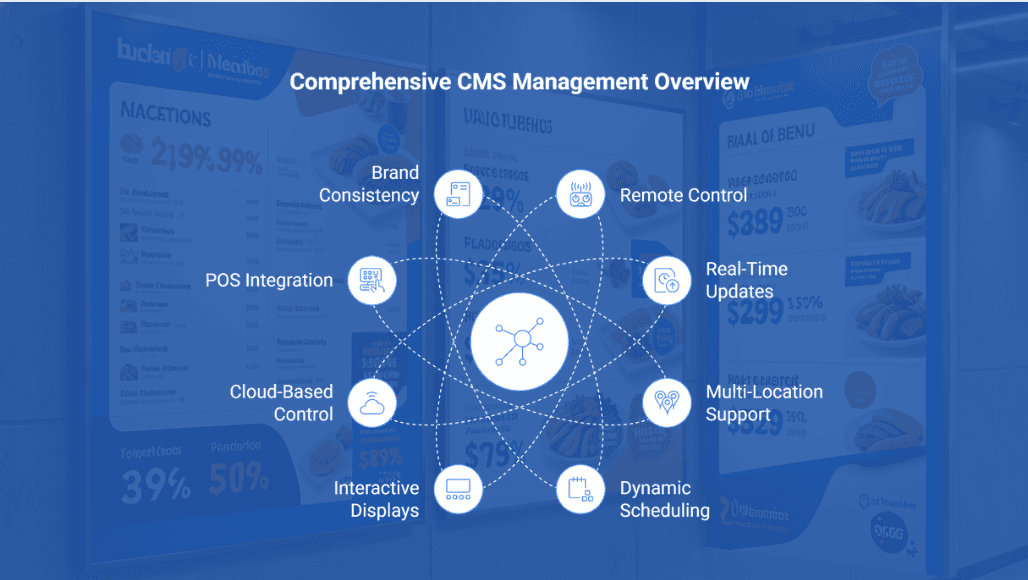
Centralized CMS Management
All your menu boards can be controlled remotely from one dashboard.
Real-Time Content Update
Always up-to-date pricing, promotions, and menu changes on all displays.
Multi-Location Support
Ideal for businesses such as restaurants and chains with several branches.
Dynamic Content Scheduling
Restaurants automatically update the breakfast, lunch, dinner, and seasonal menus.
Interactive Display Support
Wilyer is touch-friendly and customer interaction-enabled.
Cloud-Based Control
With cloud technology, restaurant operators can control signage from anywhere.
POS Integration
Connect menus to the POS system for automatic inventory and pricing
Brand Consistency
Have consistent branding, graphics, and marketing throughout the restaurant network.
Why Restaurants Prefer Wilyer
Restaurants select Wilyer for its ability to provide them with a combination of:
Easy-to-use software
Scalable signage solutions
Reliable cloud infrastructure
Professional display management
Advanced automation capabilities
Whether it’s a single calf or a large restaurant chain, Wilyer helps businesses deliver engaging customer experiences while reducing operational complexity.
Best Restaurants that Benefit from Digital Menu Boards
Digital menu boards are extremely effective for the following types of menus:
Fast-food restaurants
Coffee shops
Fine dining restaurants
Ice cream parlors
Bakeries
Food Trucks
Cafeterias
Hotel restaurants
Cloud Kitchens
Bars and Pubs
Digital signage is a great solution for enhancing business efficiency and customer interaction for any food-related business.
Tips for Implementing Digital Menu Boards Successfully
Use High-Quality Food Images
Professional Images boost the appeal of appetites and enhance conversions.
Keep Layout Clean
Simplify menus and make them easy to read.
Highlight best Sellers
Encourage profitable items, but in an effective manner
Schedule Daypart Menus
Automatically switch menus according to breakfast, lunch, and dinner times.
Integrate POS Systems
Automated inventory and pricing
Use Motion Graphics Carefully
Animations should be used to make things more visible, but not distracting to customers.
Conclusion
In 2026, the restaurant industry will be more digital, automated, and customer-centric. Traditional printed menus can no longer compete with the flexibility, engagement, and efficiency offered by digital menu boards.
From improving customer experiences to increasing sales and reducing operational costs, the advantages are undeniable.
Restaurants that switch to digital menu boards today position themselves for long-term growth, stronger branding, and higher profitability.

Multi-Platform Compatibility for Every Digital Signage Display
Run Wilyer’s digital signage software on your preferred operating system with zero hassle.