What Features Should I Look for in Digital Signage Software
Discover the must-have digital signage software features including live monitoring, proof of play, bulk screen control, and more to manage displays easily.
If you are considering digital signage software for your business, you are probably asking the big question: What features should I look for? With so many options in the market, it is easy to get lost in the noise. The truth is, the best digital signage platform is not just about pushing content to screens. It is about giving you full control, simplifying management, and ensuring your displays always work the way you want.
Let’s break down the most important features you should pay attention to when evaluating digital signage software.
Informative Dashboard for Easy Control
Your dashboard should feel like mission control. It should give you an overview of all your displays, their current status, and what content is running. A well-designed dashboard makes it easy to check the health of your signage network and take quick actions without digging through complicated menus.
Remote Live Screenshots and Playback Monitoring
Imagine being able to see exactly what is playing on your screen right now without having to physically visit the location. Live screenshot functionality allows you to do just that. It gives you peace of mind that your content is running correctly and that your campaign is reaching your audience in real time.
Detailed Hardware and OS Information
When something goes wrong, you should not be left guessing. Look for software that shows device details like RAM in use, storage capacity, resolution, IP, MAC address, and network strength. This makes troubleshooting much faster and keeps your IT team happy.
Live File Download Tracking
Uploading content is one part of the job. Making sure it is downloaded successfully to every screen is another. With live file download tracking and a local file list, you can confirm that updates are delivered on time without errors.
Network Uptime Reports
Downtime can mean missed opportunities. A good digital signage solution captures network uptime history for every screen. Even better, it should allow you to export this data into formats like CSV or PDF so you can share reports with your team or clients.
Bulk-Screen Management
Managing one or two screens is simple, but what about hundreds of them across locations? Bulk-screen management makes this possible. With a few clicks, you can update playlists, adjust settings, export reports, or restart apps on multiple devices at once. This feature saves enormous time for businesses with large networks.
Grouping and Sub-Grouping of Screens
If your business operates in multiple regions or outlets, you need smart grouping. With nested group options like Country > State > City > Outlet > Screen, you can organize your network in a way that matches your business structure. This also helps in giving controlled access to specific users.
Engaging Live Data Widgets
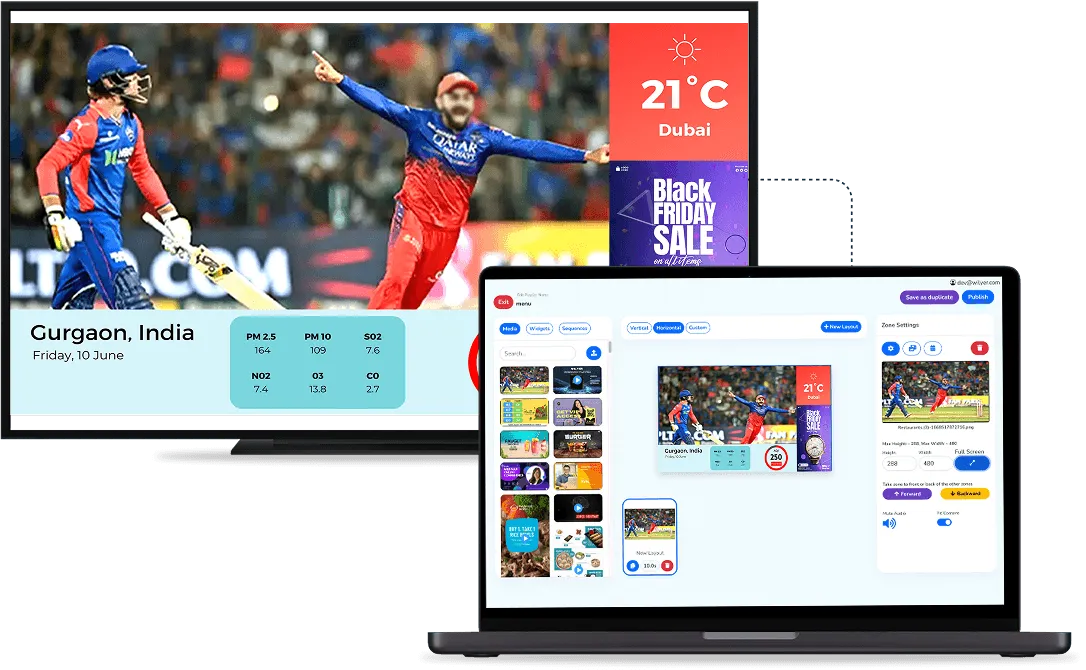
Static content alone does not always grab attention. Live widgets like scrolling tickers, weather updates, AQI, RSS feeds, YouTube streams, or even live RTMP/RTSP broadcasts can make your signage more dynamic and relevant to viewers. These real-time elements keep audiences engaged longer.
Organized Folder System for Media
Managing hundreds of content files can get messy without a structure. A folder system makes organization simple and allows teams to scope content to certain screens or locations. It also helps when multiple sub-users need access to only specific sets of media.
Support for Custom Resolutions
Not all displays are standard TV screens. Outdoor LED boards, portrait screens, and extra-wide formats all need special support. Look for software that allows pixel-perfect partitioning and works seamlessly with custom ratios such as 1:1, 9:16, or 2:10.
Scheduled Brightness Control
Power saving and audience comfort go hand in hand. With brightness scheduling, your screens can automatically dim at night and brighten during the day. It is a small feature that makes a big difference in usability and energy efficiency.
Role-Based Team Access
When multiple people are involved in managing screens, access control becomes crucial. Role-based permissions allow you to assign roles like viewer, editor, or manager. This ensures each team member has the right level of access without risking unauthorized changes.
Proof of Play Reporting
If you are running advertisements, proof of play is essential. These reports confirm exactly what content played, when it played, and how often it appeared on each screen. From screen-wise playback to media-specific logs, this feature is particularly important for advertisers and DOOH businesses that need accountability for every campaign.

Features of Digital Signage Software by Industry
| Feature | Retail | Restaurants | Healthcare | Education | Corporate Offices | DOOH / Advertising |
|---|---|---|---|---|---|---|
| Informative Dashboard | Monitor multiple outlets | Manage menus across branches | Track waiting room screens | Oversee campus displays | Manage office-wide signage | Manage ad networks |
| Live Screenshots & Monitoring | Check promos in real time | Verify menu boards | Confirm patient info screens | Monitor classroom boards | Track meeting room displays | Ensure campaigns run |
| Hardware & OS Details | Spot device issues fast | Monitor kitchen display health | Keep medical screens stable | Support IT teams | Troubleshoot devices | Keep uptime guaranteed |
| File Download Tracking | Confirm promo uploads | Track menu updates | Verify patient info updates | Ensure lesson content updates | Confirm internal comms | Ensure ad media downloads |
| Network Uptime Reports | Maintain store network | Reduce downtime at outlets | Ensure 24/7 medical displays | Keep learning uninterrupted | Monitor global uptime | Critical for ad proofing |
| Bulk-Screen Management | Update 100+ stores at once | Push menus chain-wide | Manage hospital-wide displays | Update all classrooms | Control corporate branches | Control large ad networks |
| Grouping & Sub-Groups | City/branch-based grouping | Group by outlets | Group by departments | Campus-based grouping | Floor/department grouping | Region/city-based ad groups |
| Live Data Widgets | Show promos, weather, news | Display specials, live feeds | Health tips, wait times | Timetables, news tickers | KPIs, announcements | Live stats, news feeds |
| Folder System for Media | Organize promos by store | Separate food categories | Departmental content | Faculty content folders | Internal comms by teams | Campaign folders |
| Custom Resolution Support | Fit LED window displays | Vertical menu boards | Waiting room LED walls | Auditorium LED boards | Lobby video walls | Outdoor billboards |
| Brightness Scheduling | Adjust for shop hours | Dine-in vs late-night control | Comfort for patients | Classroom hours | Save energy Off-hours | Outdoor day/night control |
| Role-Based Access | Store staff limited access | Chefs/editors limited rights | Doctors vs staff access | Teachers vs admins | Managers vs staff | Agencies Vs clients |
| Proof of Play Reporting | Proof of Play Reporting | Verify menus | Confirm health info | Audit lessons played | Internal reporting | Essential for advertisers |

Curious about costs? We have a detailed guide that breaks down how digital signage software pricing works, including what factors affect the price and how to choose the best plan for your business. Check it out here: Digital Signage Software Pricing in 2025
Frequently Asked Questions
1. What is proof of play in digital signage?
Proof of play reporting shows you exactly when and where your content was displayed. It provides timestamped logs and playback counts that are especially useful for advertisers and digital out-of-home (DOOH) campaigns.
2. Can I manage multiple digital signage screens remotely?
Yes. Modern digital signage software allows you to manage, monitor, and update hundreds of screens remotely. Features like bulk actions, live screenshots, and remote configurations make it easy to control your network from anywhere.
3. Why is role-based access important in digital signage software?
Role-based access ensures that different team members have the right level of permissions. For example, a content creator might only be able to upload media, while a manager can assign playlists and control screen groups. This prevents errors and keeps the system secure.
4. Do I need support for custom resolutions?
If you plan to use LED walls, vertical displays, or non-standard screen formats, support for custom resolutions is essential. It allows you to deliver pixel-perfect content without stretching or cropping.
5. How do live widgets improve digital signage?
Live widgets like news tickers, weather updates, or streaming content keep your signage fresh and engaging. They help grab attention and ensure viewers always see something relevant in real time.
Wrapping It Up
The right digital signage software goes beyond basic content scheduling. Features like live monitoring, grouping, proof of play reporting, bulk management, and role-based access ensure your network runs smoothly and efficiently. When evaluating platforms, always look for a balance between simplicity and powerful functionality.
👉 Want to try a solution that includes all these features and more? Start your 14-day free trial with Wilyer today and see how easy digital signage management can be.