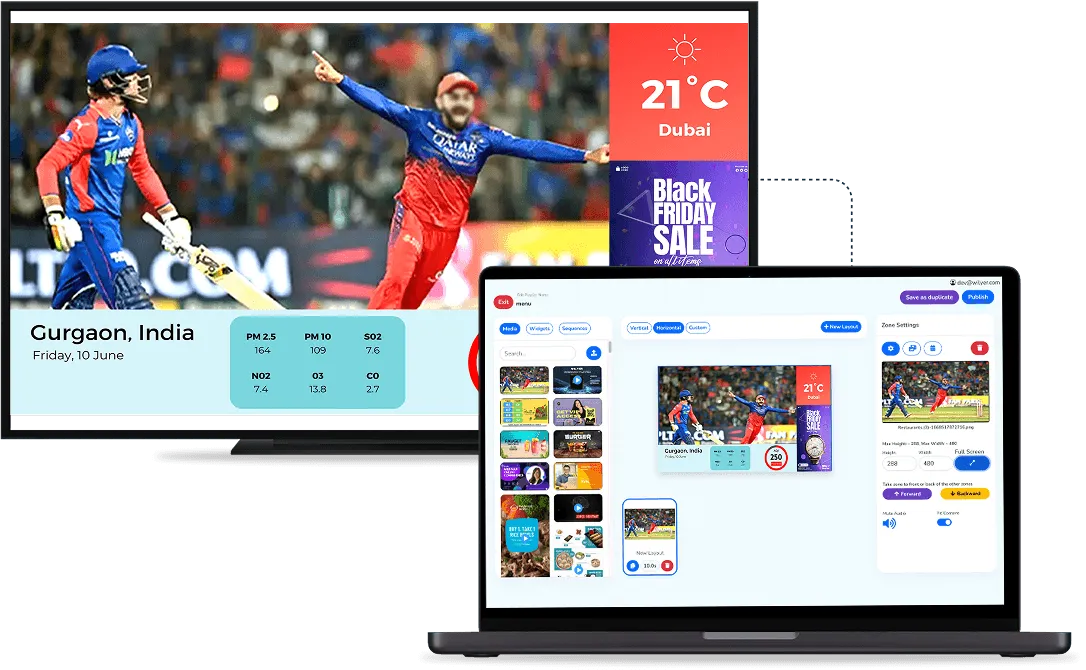

Yes, a modern digital signage platform can manage screens running on different operating systems from a single centralized dashboard. You are not limited to one device type or one operating system within the same account.
This flexibility is one of the biggest advantages of using a cloud based signage platform.
Multi Operating System Compatibility
A single digital signage account can include screens running on:
- Android devices
- Windows PCs or mini PCs
- Samsung Tizen commercial displays
- LG webOS commercial displays
- Fire TV or Fire Stick
- Raspberry Pi devices
You can mix and match devices depending on availability, budget, or project requirements. For example:
- Some screens can run on Android TVs
- Others can run on Windows media players
- A few locations can use Samsung Tizen
- Another set can use LG webOS
All of these screens can still be controlled from one dashboard.
Centralized Control from One Platform
Even when devices use different operating systems, the platform allows you to:
- Upload and schedule content
- Monitor playback
- Take remote screenshots
- Manage playlists
- Control multiple locations
- Track screen health
This means you do not need separate systems for different hardware types.
Hardware Flexibility and Better ROI
Multi operating system compatibility gives businesses the freedom to:
- Choose any supported hardware brand
- Upgrade devices gradually
- Replace screens without changing the platform
- Optimize costs across locations
You are not locked into a single manufacturer or operating system, which improves long term return on investment.
Real World Deployment Advantage
In practical deployments, businesses often have mixed hardware environments. Some screens may be older Android devices, others newer commercial displays from Samsung or LG. A modern signage platform allows all of them to be centralized under one account without complexity.
In summary, yes, one digital signage platform can manage screens across different operating systems. This cross platform flexibility allows businesses to scale efficiently, reduce hardware dependency, and manage all screens from one unified dashboard.