
A robust digital signage software should be highly compatible, secure, and enterprise-ready. It must support multiple operating systems such as Windows, Linux, Android, Tizen, and Raspberry Pi, and work with commercial-grade media players like BrightSign and Assured Systems. Security is essential, so AES encryption for server-screen communication ensures content safety, even over HTTP. The software should auto-start at boot and allow remote features like live screenshots, hardware monitoring, and live file downloads to guarantee smooth content delivery.
Key features include:
- Hardware & network monitoring: RAM, ROM, network health, and signal strength.
- Live streaming & content delivery reports: Track progress for online/offline playback.
- Uptime tracking: Hourly, daily, and monthly reports to monitor screens.
- Remote commands & license management: Restart devices or transfer licenses.
- Bulk configuration & team management: Configure multiple screens, set kiosk mode, assign groups, and manage access permissions.
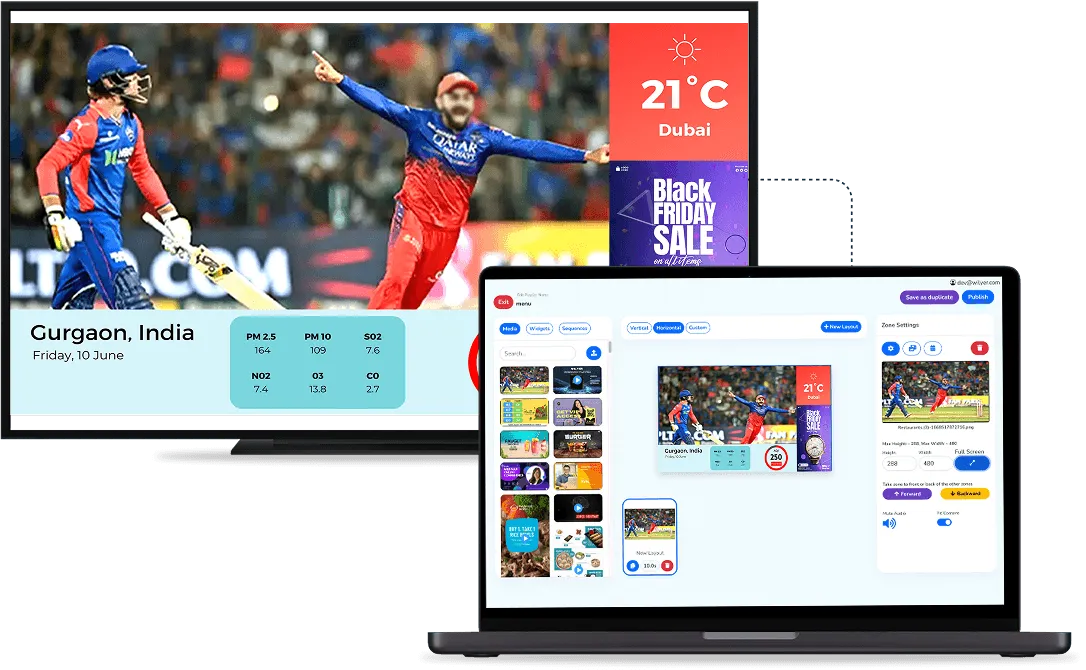
- Live data integration: Display weather, AQI, YouTube/RTSP/RTMP/HLS streams, RSS feeds, Power BI dashboards, etc.
- Content adaptability: Adjust content automatically for portrait or landscape screens.
- Advanced scheduling: Divide screens into zones, play unique content, and handle different layouts.
- Screen control: Manage brightness, on/off schedules, and remote playback.
- Enterprise features: HDMI capture, NTP synchronization, remote device management, VAST ad integration, and broadcasting.
A good digital signage software is more than a CMS . It centralizes multiple screens, manages security, delivers advanced content, and supports enterprise-grade operations across locations.
Explore a complete list of digital signage software features built for performance, scalability, and security.