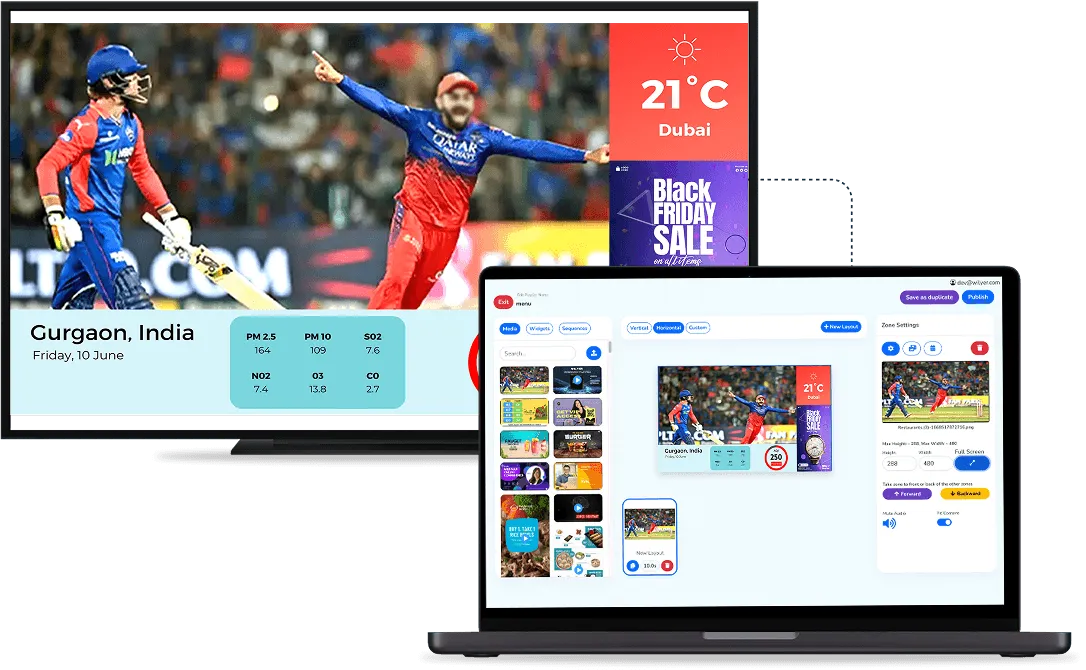

Digital signage shows up in many everyday places. Here are practical examples that match what you described - each shows the purpose and benefit.
- Digital menu boards (restaurants, QSRs) Replace printed menus with screens that update prices, images, and specials instantly. They switch automatically (breakfast → lunch) and are great for upsells.
- Outdoor LED billboards / video walls (DOOH) High-brightness, weatherproof LED walls on streets or outside malls showing ads, public messages, or live data (AQI, ETA). They’re visible in daylight and can be remotely updated.
- Airport/Transit displays Arrival/departure boards, gate info, and wayfinding. These are mission-critical for passenger flow and must be reliable and real-time.
- Retail in-store displays Shelf-edge labels, aisle displays, product catalogs, and promotion pods. Use cases include “lift & learn” where picking a product shows details on a nearby screen.
- Lobby displays / corporate dashboards Welcome messages, KPIs, and meeting schedules to inform visitors and employees.
- Interactive kiosks & wayfinding Touchscreens in malls, colleges, or hospitals for directions, event info, or ticketing.
- Queue management screens (banks, government) Token numbers, service counters, and waiting-time displays that reduce confusion and improve throughput.
- Robotic displays / mobile screens Screens on wheels (robotic displays) roaming retail floors for engagement and information.
Each example has the same core: a screen + software that delivers the right content at the right time. The best examples solve a clear problem - informing people faster, improving sales, or managing flows.