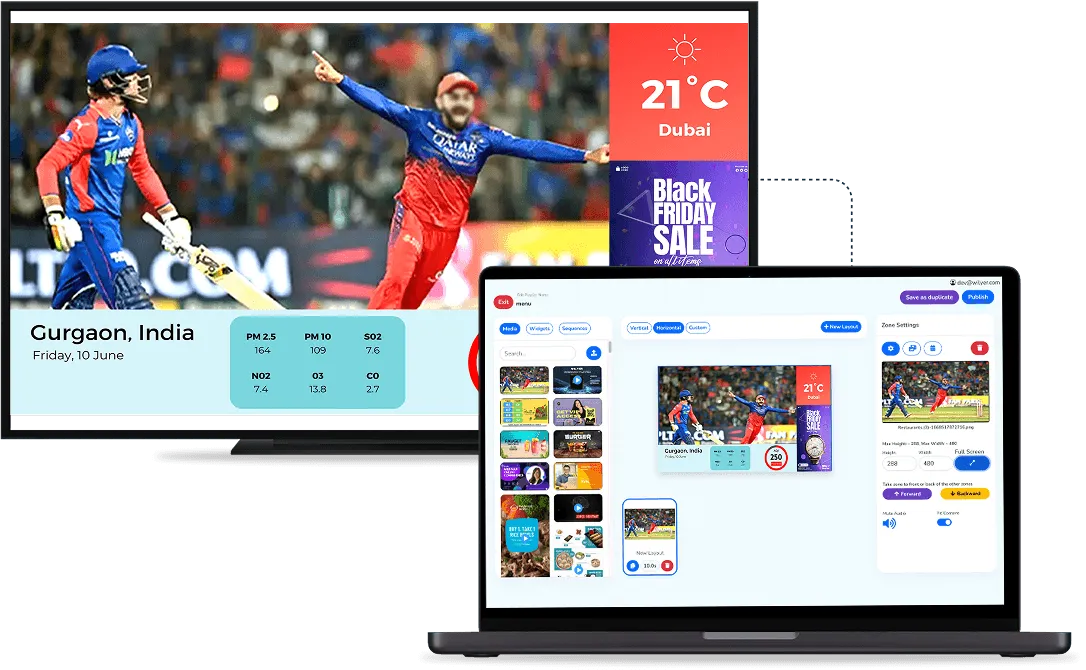

There’s no single “best” size - it depends on placement, viewing distance, and purpose. Use this simple guide to pick the right size for common use cases.
Indoor recommendations (typical viewing distances):
- Digital menu boards (counter-side): 32″–43″. Common for order counters; 43″ works well for clearer visuals and nicer layout. If you need big menu visibility, use 43″ or a 2-screen setup.
- Retail standees / window displays: 43″–55″ (portrait or landscape). A 43″ portrait standee is compact yet visible; 55″ gives stronger impact in busy malls.
- Mall kiosks & lobby displays: 55″–65″ or larger. For high footfall areas, 65″ grabs attention from farther away.
- Video walls: multiple 55″ or smaller panels tiled to create very large displays for immersive or brand experiences.
- Room/door displays (meeting rooms): 10″–24″ (small tablets) to show schedules and occupancy.
Outdoor recommendations:
- Outdoor LED walls / billboards: These are measured in physical feet: common effective sizes start around 8×10 ft and go much larger. For outdoor use, pick purpose-built LED with high brightness (daylight visibility).
Brightness (practical note):
- Indoor: 300–500 nits (enough for indoor light).
- Window-facing or bright indoor areas: aim for higher brightness (600–1000 nits).
- Outdoor: 2,000+ nits for daylight visibility (LEDs/ outdoor displays).
Orientation:
- Portrait (vertical): Good for walkways, window posters, and shelf-edge displays.
- Landscape (horizontal): Good for menu boards, TV-style content, or wide banners.
Quick decision rule:
- If viewers are close (under 3m): 32″–43″ is fine.
- If viewers are farther (5m+): choose 55″ or larger.
Also consider resolution (1080p vs 4K) and where the screen will be mounted. For most indoor business uses, a 43″ display in portrait or landscape is a safe, versatile choice.