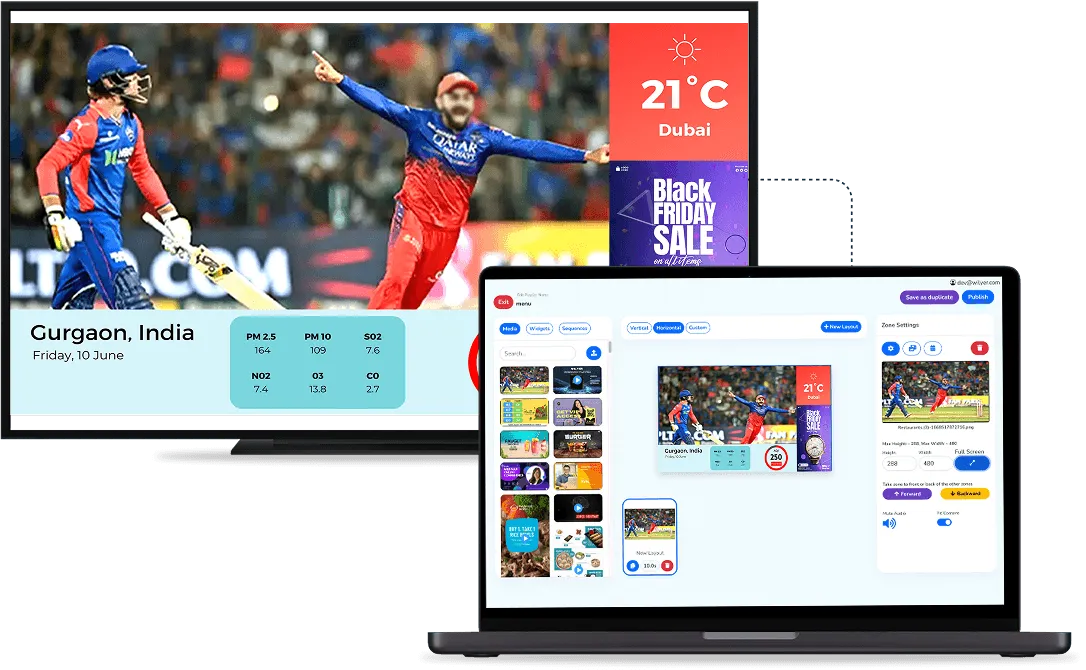

Almost every industry uses digital signage today, it’s become a universal communication tool. The better question is which formats each industry uses. Here’s a clear, short breakdown and what they get from it.
Common users and use cases:
- Retail: window displays, shelf-edge labels, promotional standees, billing-counter upsell screens, interactive kiosks and “lift & learn” displays. Retail uses signage to boost sales and guide shoppers.
- Restaurants / QSRs: digital menu boards (switching by meal times), promos, combo upsells - easy to update across branches.
- Airports, rail, transit: arrival/departure boards, wayfinding, and real-time passenger information. Critical for operational updates.
- Hospitals & Clinics: lobby displays, doctor schedules, queue management, health education content - improves patient flow and communications.
- Banks & Government: queue systems, official notices (example: RBI compliance messaging), and public info screens for transparency and service updates.
- Education (schools & universities): digital notice boards, event streams, wayfinding, room schedules, cafeteria menus.
- Corporate: meeting-room displays, internal dashboards, lobby branding, employee announcements.
- Hospitality (hotels): lobby greetings, event info, in-room displays.
- DOOH (Digital Out-of-Home): large LED walls and programmatic ad screens in public spaces, malls, and roadside billboards.
- Transport & vending: inside buses/ taxis and vending machines with dynamic ads or route info.
How to approach adoption:
- Identify the problem (inform, promote, reduce wait time).
- Pick the right display and CMS for that use.
- Start with a pilot (1–3 screens), measure engagement, then scale.
In short: nearly every sector that needs fast, visible, and updatable communication benefits from digital signage.