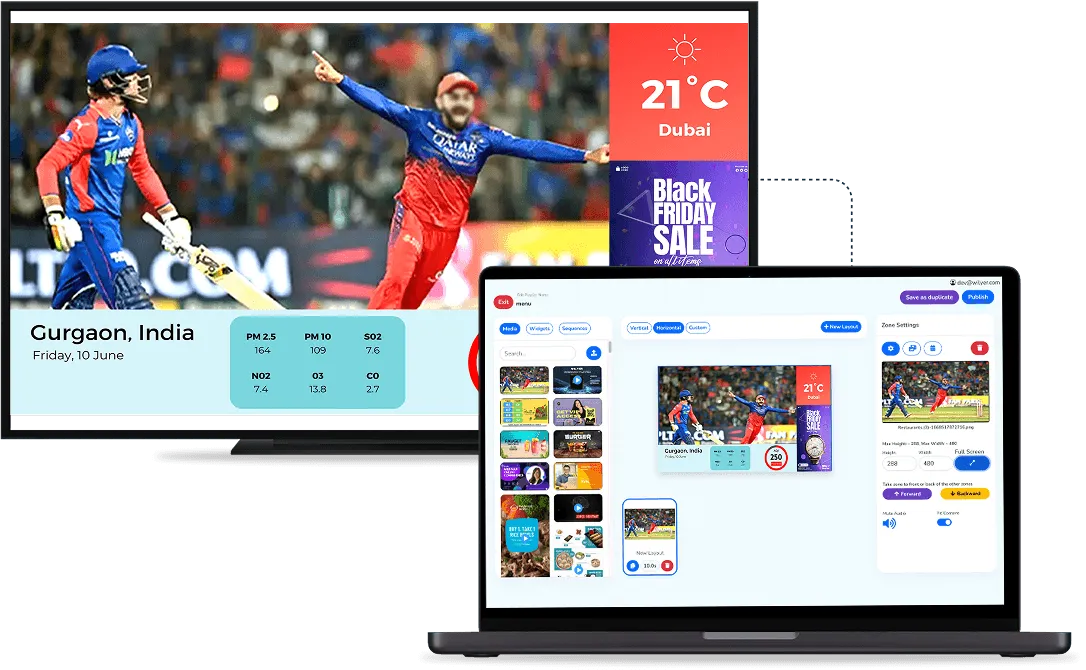

They sound similar but serve different levels of function. Here’s a plain, practical comparison.
Electronic signage (basic):
- Often refers to simple LED dot-matrix or segmented displays (think basic train station tickers or simple numeric displays).
- Shows fixed or limited text/numbers (arrival times, temperature, simple messages).
- Usually proprietary hardware and limited interfaces - not app-based.
- Low cost, low flexibility, minimal integration, low brightness control.
- Good where only basic, repetitive information is needed (simple time/price displays or numeric counters).
Digital signage (advanced):
- Uses full-screen LCD/LED/OLED displays or LED walls capable of video, images, and complex layouts.
- Runs software (an OS or media player) and supports apps, widgets (weather, YouTube), live feeds, and interactive elements.
- Can be networked - update content remotely via a CMS, schedule playlists, and monitor screen health.
- Supports integrations (POS, sensors, cameras), multi-zone layouts, and analytics.
- Ideal for marketing, wayfinding, interactive kiosks, and any scenario demanding rich visuals or real-time updates.
When to choose which:
- Choose electronic signage if your need is extremely simple, cost-sensitive, and static (e.g., numeric counters).
- Choose digital signage if you need flexibility, rich content, remote updates, and integrations.
In short: electronic signage = basic, cheap, fixed. Digital signage = powerful, flexible, networked. Most modern deployments use digital signage because of the ability to change content and measure results.